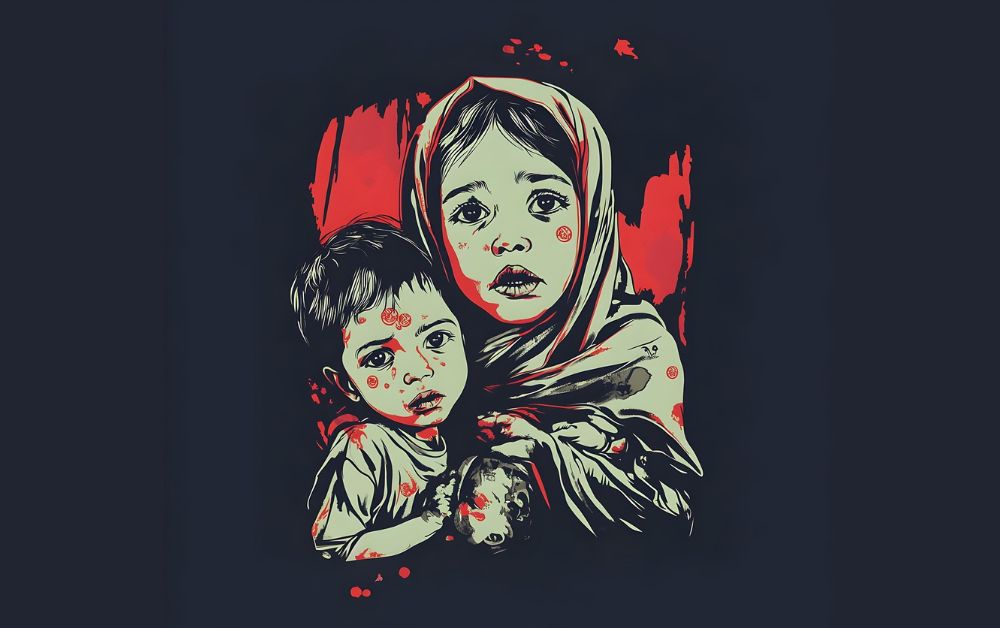
“Why can you come to my country and stay however long you’d like, but it’s impossible for me to even get a passport or visa to visit yours?”
The above question replays itself in my mind several times each day. It was a very reasonable question, yet I’d never found myself more dumbfounded. In 2017, I was spending the summer in a rural Haitian village just outside of Cap-Haitian, the historic city where the Haitian Revolution was won by what would become the world’s very first Black Republic. I was there to teach English at a local Catholic summer school as well as to immerse myself in Haitian culture and learn Creole.
Despite the reality that I was the only White-American in the village of Thibeau, the community was extremely welcoming to me. One of the women would come by the rectory I was staying at regularly and bring fresh fruits that she picked herself. I was very well loved by the children and various families that invited me into their homes to chat, play games, or even just sit in silence because my Creole was limited at the time.
I stayed at the home of the local Catholic priest and some of his relatives. They spoiled me with hospitality. I would try to secretly do my laundry, because I didn’t want anyone doing it for me, but I would be reprimanded by the priest. I had every meal cooked for me, every dish washed for me, and was really, respectively, treated like a king. I do not say this to brag. Rather, this all made me very uncomfortable and scathingly aware of the privilege I was unintentionally carrying around Thibeau with me.
That scathing awareness peaked during the conversation which the quote at the beginning of this introduction would come from. The priest’s niece and I were having a casual conversation, as my Creole began to improve a couple of months into my stay, when she dropped this bombshell of a question on me. She articulated how easy it was for me to come to Haiti and stay for my initial 90 days on an American passport. If I wanted to stay longer, I would just need to easily cross the border into the Dominican Republic and come back for another 90 days. Subsequently, I’d probably be able to eventually get a work-visa, or some sort of residency status. However, for most Haitians, being able to do the same in the land of the free and home of the brave is an imaginative thought.
How would I come up with the money to save for a passport? Will I even be able to get an appointment at the consulate (a six hour tumultuous drive from Thibeau to Port-au Prince)? I need at least a tourist visa. Will I be approved? I don’t have the required ‘proof of financial ability to support myself’. Can I afford the visa if I’m approved? Do I even want to go through all of the hassle and endless months of waiting?
That is just to visit. If we were to have this conversation today, given the situation of Port-au-Prince, there would not even be any hope, because routine visa appointments are suspended due to gang-violence. In addition to that, the President of the United States was recorded on national television peddling blatant lies that Haitian migrants are eating and stealing U.S. citizen’s pets. Yes, that actually happened.
Not only did I have the immense privilege of visiting and staying in Haiti for an undefined amount of time if I were to navigate around the 90-day visitor requirements, but I had the privilege of being treated like a king by many citizens of Haiti, especially those in Thibeau. On the contrary, in the days after President Trump made comments about Haitian migrants eating pets, there were over 30 bomb threats to local schools and other public spaces. (1)
While some places in the United States are very welcoming to visiting foreign outsiders, I do not believe most communities in rural America would be nearly as hospitable to a Haitian visitor who struggled to speak the language, as Thibeau and other small Haitian villages were to me. I do not believe we’d be bringing them hand-picked crops, scrumptious meals, doing their laundry, teaching them English, or inviting them into our daily lives, without any judgement passed. That is just not the way things are. I found myself asking after this harsh reality check: okay, then why? Eight years later, I find myself not yet having an answer but working tirelessly on it.
This foundational experience forced me into the abyss of the migration crisis, which would bring me on journeys in Mexico City, Jamaica, San Diego, Tijuana, Denver, and Miami. It led me to start seriously questioning how to align my perspectives about it with the values of my faith and the teachings of Jesus Christ.
I have decided to write this because I am frustrated. I am particularly frustrated about the reality that a more-than-comfortable amount of Christians in my country are either ignorant of, indifferent to, or opposed to the teachings of Jesus and the Church as they relate to the modern realities of immigration and foreign policy. Ignorance is not always chosen. I am ignorant in a thousand different ways, however, we must not be willfully ignorant. We must strive to learn about complex issues that affect our brethren in Christ.
Maximilian Kolbe, a priest who gave his life at Auschwitz in place of a Polish army sergeant famously said, “The most deadly poison of our time is indifference.” Indeed, this remains loudly true today. The easiest solution to dealing with deep questions of conscience and society is to avoid them or choose to not care about them. Perhaps some feel a need to understand an issue’s relevance to their own life to care about it, however, the Christian perspective is not one of indifference to those beyond “our circle”.
I am writing this because I want to foster dialogue around this issue of Christians expressing a full-fledged support for President Trump’s immigration and foreign policies, while they express blatant disregard for Christian teachings and Gospel values in certain regards. I want Christians to wrestle with these complex realities, seek truth, and demand accountability.
I am writing this to be a voice for Christians that are wrestling with these complex realities of faith and politics as it relates to immigration and foreign policy. Many of us are frustrated–perhaps, outraged–at the fact that many of our brothers and sisters in Christ perpetuate inflammatory, anti-Gospel value words and actions towards those Jesus explicitly demands us to show compassion towards. Many of us feel isolated and confused. We wonder if we are “crazy”. Until we remember that Jesus probably seemed a little crazy, too.
I want to make it abundantly clear to non-Christians who may stumble upon this, that we do care. Deeply. It breaks my heart that there is a common saying, “there’s no love like Christian hate”. Yet, I do not blame those who share this saying. How can we Christians say that we are the movement of love, peace, and truth, when we are supporting ending USAID funding that will result in unnecessary deaths for thousands suffering curable diseases? How can we say we are about that when non-believers see us turning a blind eye, or even clapping our hands at the Trump Administration’s mass deportation endeavors, including, but not limited to the deportation of a little girl with cancer on her way to the emergency room? Why are these Christians “liking” the U.S. Department of Homeland Security’s Instagram post about comparing the sound of the chains of deported migrants to “ASMR”?
There’s no love like Christian hate. I understand this perspective. We need to have serious conversations about being Christians who seek truth and justice in all circumstances and align our consciences with Gospel values rather than political ones.
(1)“New Threats in Springfield Over Trump Comments About Immigrants.” NBC News, 17 Sept. 2024