According to the minutes, Roger Sherman, an orthodox Christian from Connecticut, seconded Franklin’s motion. After Sherman’s second, discussion ensued. Some delegates, led by Alexander Hamilton, were worried the public would be alarmed by the spectacle of clergy arriving at the statehouse. Hamilton thought the public might “believe that the embarrassments and dissentions within the convention, had suggested this measure.” Recall the confidence of the columnist? Bringing in ministers might have disrupted their public image of progress inside the hall.
Those in favor of prayer had an answer: “It was answered by Docr. F. [Benjamin Franklin] Mr. Sherman & others, that the past omission of a duty could not justify a further omission—that the rejection of such a proposition would expose the Convention to more unpleasant animadversions [criticisms] than the adoption of it: and that the alarm out of doors that might be excited for the state of things within. would at least be as likely to do good as ill.”
Franklin, Sherman, and unnamed like-minded delegates replied that one cannot undo a wrong by failing to do good. Indeed, they warned that the public might later question why they failed to call on God. Former Presbyterian minister and physician Hugh Williamson had another, more practical theory about the lack of prayer: “The true cause of the omission could not be mistaken. The Convention had no funds.”
Perhaps that was an excuse. It is hard to imagine that someone in the Convention Hall could not have offered a prayer. If Christians who believe America was founded as a Christian nation are correct, surely one of those devout founders could have simply prayed for free, right?
Then delegate Edmund Randolph from Virginia offered a compromise: “Mr. Randolph proposed in order to give a favorable
aspect to ye. measure, that a sermon be preached at the request of the convention on 4th of July, the anniversary of Independence,—& thenceforward prayers be used in ye Convention every morning. Dr. Frankn. 2ded. this motion. After several unsuccessful attempts for silently postponing the matter by adjourning, the adjournment was at length carried, without any vote on the motion.” (6)
Randolph offered a motion to jump-start matters with a sermon on the upcoming July 4 holiday recess. Then, after that proposed religious ceremony, the delegates could begin their deliberations with daily prayers for God’s help.
Did the delegates go for that? No. In the end, neither Randolph’s nor Franklin’s motion carried. The session was adjourned for the day without a vote, and neither motion was ever reconsidered. In Franklin’s journal, he later wrote this about his call to prayer, “The Convention, except three or four persons, thought Prayers unnecessary.” (7)
That is what was recorded in the minutes on June 28, 1787, in the Pennsylvania State House during the Constitutional Convention: Ben Franklin offered a proposal to pray that was never voted on (see the appendix for Franklin’s full speech).
But you wouldn’t know these facts if you listened only to those who circulate the myth that the United States was founded as a Christian nation. Listen to former Donald Trump administration Secretary of Housing and Urban Development Ben Carson tell the story:
You know the founders of this country were really some terrific people. And they were studious. And they studied every government system that ever existed in the history of the world because they wanted to take the good things and leave the bad things out and give us the kind of country that would last and would have freedoms for our people.
But it was a rough go. And in that last Constitutional Convention in Philadelphia, the whole thing almost broke apart because there were so many disagreements about how it should be done. And then the elder statesman, 81-year-old Benjamin Franklin, came up and he said, “Gentlemen, stop. Let’s get down on our knees and let’s seek wisdom from God.” And they knelt and prayed. And they got up and they put together the Constitution of the United States, which I think is a God-inspired document if we will follow it. (8)
Huh? They knelt and prayed? No, they didn’t do that. Their problems were solved? No, the delegates resisted Franklin’s motion and adjourned without a vote. And the next day, there in that hot room, they got right back to arguing.
Here’s another version of the story, this time from Christian legal firm Liberty Counsel. On a Liberty Counsel radio show, the story was used to support the legitimacy of a 2017 federal appeals court decision allowing a Texas school board to open meetings with prayer. (9) Mat Staver is chair of the firm.
Mat Staver: It began with Benjamin Franklin during the early Constitutional Conventions. During those Constitutional Conventions where they were debating after the revolution what to do, what kind of form of government are we going to have. People had one view, people had another view, different states had, you know, the Virginia proposal, or this proposal or that proposal and they had as many opinions yes as they did no, so it
started to fall apart.
At that point in time, Franklin stood up, and he has this famous speech where he talks about “unless God builds the house, we’re not going to be any better than the builders at Babel” and that God governs in the affairs of men and have we now forgotten our most powerful friend or do we think we no longer need him. And he implored everyone from that point on to every time they deliberate, to begin their deliberations with prayer. They did. They had a long prayer, not just a short little sixty-second or two-minute prayer, but a long prayer meeting. It was the turning point that ultimately brought America’s founding together and ultimately the United States Constitution, and later the Bill of Rights, which is the First Amendment. (10)
Now that you know the actual story, you can see where Staver’s account goes off the rails. Yes, Franklin suggested to the delegates that they appeal to God for help. That’s a fact. But they didn’t do it. The delegates didn’t have a long prayer or a short prayer. It wasn’t a turning point in the deliberations over the Constitution. Ben Franklin’s call to prayer had nothing to do with what is in the Constitution or the Bill of Rights.
6 All quotes from Farrand, Records of the Federal Convention, vol. 1, June 28, 1787.
7 Farrand, Records of the Federal Convention, vol. 1, June 28, 1787.
8 Warren Throckmorton, “Ben Carson Botches Ben Franklin Prayer Story (UPDATED),” Warren Throckmorton (blog), July 26, 2024, https://wthrockmorton.com/2024/07/26/ben-carson-botches-ben-franklin-prayer-story-updated/.
9 American Humanist Association v. Birdville Independent School District, No. 16–11220, United States Court of Appeals for the Fifth Circuit, March 20, 2017, https://www.ca5.uscourts.gov/opinions/pub/16/16-11220-CV0.pdf.
10 “Federal Court Rules TX School Board Can Continue Student-Led Prayer,” Liberty Counsel, March 31, 2017, https://www.lc.org/faith-and-freedom-full-article/federal-court-rules-tx-school-board-can-continue-studentled-prayer.
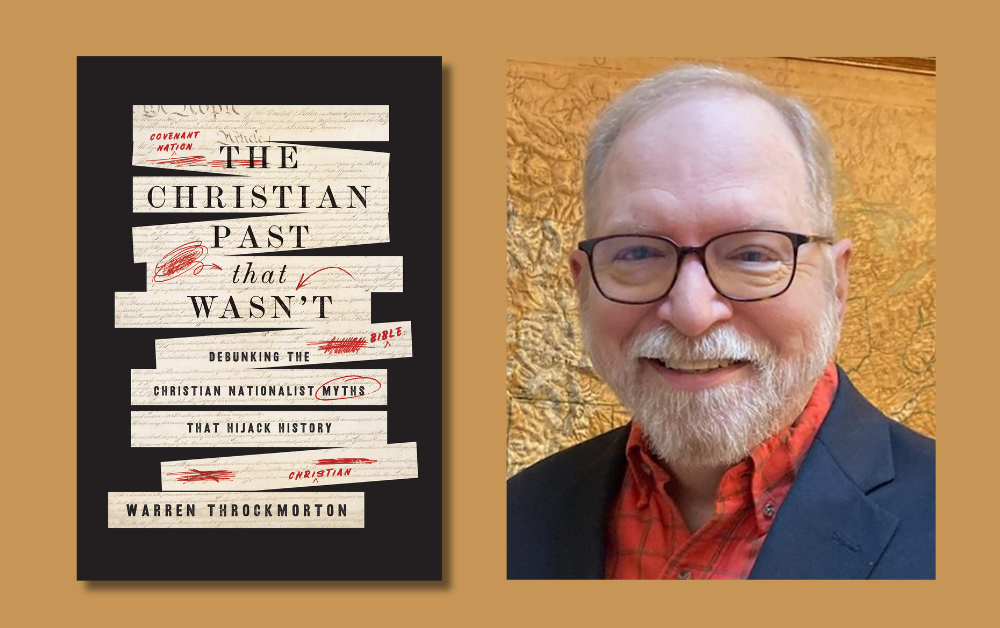
Reprinted with permission from The Christian Past That Wasn’t: Debunking the Christian Nationalist Myths That Hijack History by Warren Throckmorton copyright © 2026 Broadleaf Books.