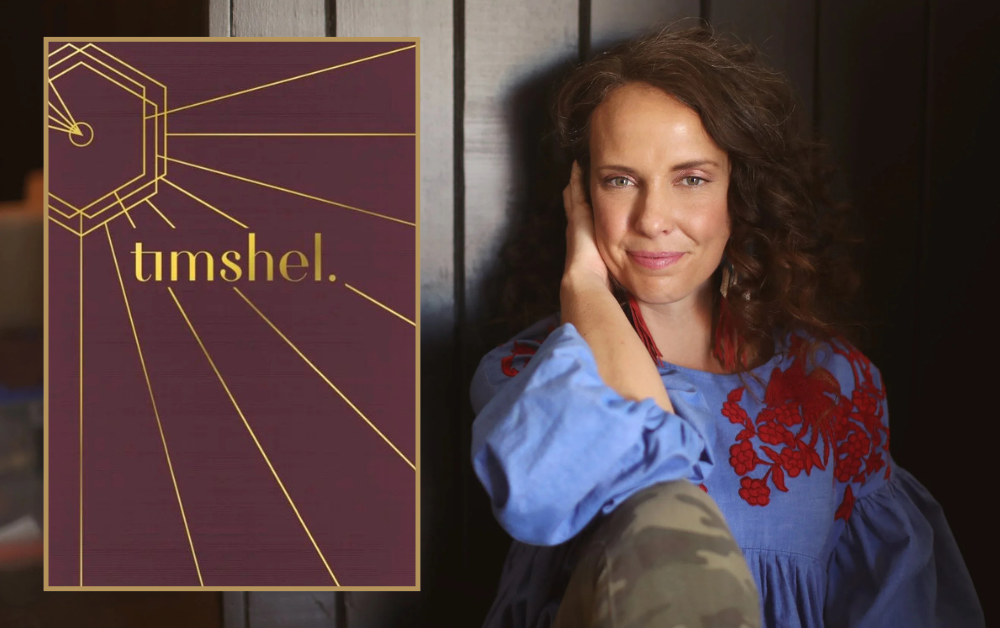
The year is 2019 and I have just left a series of church gigs in which I came up against an increasingly large number of voices who said I could not preach due to being a woman. I was told behind closed doors that I needed to run my personal blog by the elders and that I was not allowed to have my own opinions outside of the church. Despite the fact that I am a trained Theologian and went to Seminary, a male pastor stood on stage with me when I was allowed to “share my testimony”.
And somewhere in the mess and hurt of it all, I realized that we had lost the plot.
I have always thought that the Bible was a beautiful book about humanity and their interactions with God. I thought it to be full of miracles and history, and it crushed me to think I was not able to freely talk about these things.
Something to know about me is that if someone tells me I cannot walk into a room, I genuinely want to figure out why. And so, in response, I always double down. I decided to write my own Bible translation. As one does.
On this side of it, I can laugh at the absolute absurdity of it all; and I also love this version of Bonnie seven years ago who was willing to put it all on the line, quit my job, and see what I could find.
All the doubt-filled questions were there: what if they are right? What if I am not allowed to teach? What if Jesus was really about upholding these systems of rules over love and inclusion? But I had to find out for myself.
Putting it all on the Line
Initially, my hope was to take ten stories from the Old Testament and ten stories from the New Testament that I had always thought to be confusing and frankly, used for what I perceived as power or coercion within the Church or society. I wanted it to be idiomatic or include the psychology behind the characters in the stories. I wanted it to be possible to find myself in the stories instead of feeling like I had nothing in common with the text. I knew that if I was wrong, if these passages said what I had been taught by an abusive system, then this is not a God I wanted to worship or serve.
If I wasn’t wrong, then I would be able to rebuild a fragile faith that had shattered into a million tiny glass shards the moment I was born a woman who was also a theologian.
And so, I got to work.
I chose my twenty passages, gathered a team together to help me edit and give psychological input, plus a camera crew so that I could put it up on Kickstarter. Compelled to find out if I was the only one wading in these waters, my hope was that others would be interested and I would raise enough money to pay my team and make a translation that told the truth in the form of love, inclusivity and grace.
It turns out that I was nowhere near the only one who was desperately searching for a fresh reading. We raised over $40K in thirty days and sold 1,000 copies. I had only translated one story as a sample and quickly realized that people needed it as much as I did.
The thing about a Kickstarter project is that if you don’t finish the project and deliver it on your expected date, you must give all your money back. So, the risk was huge: I was paying my team of editors, artist, director, and research expert all year, not having a clue if what I would find when I translated it was something I could stand behind.
What if I translated the stories, realized I was no longer a Christian? I would have to apologize and pay everyone back who bought the book and believed in the project. It was my deep belief in humanity and love and kindness and grace that allowed me to take this risk. Because of my encounters with people who showed me who God was coupled with my own experiences in life, that despite how others had used the Bible for bad, I knew it could be used for good.
Breaking the Bible Open
Translating these passages broke open the Bible for me. I thought I would end up finding an alternative view of things, one that was an opposing viewpoint than that of which I was hearing. On the one hand I did: I found lots more gender-inclusive pronouns, how empire has always played a role in how these passages were translated and taught, and that for every bit of exclusion there was an opposing viewpoint of inclusion.
But I also learned that Timshel was the first of many iterations. That in order to do the Bible justice, we must always be breaking it open, looking at it from every angle and asking these three main questions:
- Who is translating the story?
- Who benefits from the story?
- Who is missing from the story?
And because we are an ever-changing world and society, then we must keep coming back to these questions in order to make an eternal word be, well, eternal.
The truth is, you can’t translate anything, including the Bible, without interpreting it. It’s impossible. Interpretation is baked into the whole thing. And that is the potential beauty of it: we can turn the gem, an ancient Jewish was of reading Scripture which asks more questions than it answers, as long as we have a diverse set of voices who are doing the initial posing of questions.
Not many women have translated the Bible, and Timshel is one of the few. But I am a white woman who lives in an affluent community, so while my voice is outside the norm of the many, many, male voices that have translated every Bible sold on the shelves, we are still in major need of more diverse voices in race, gender, economic standing, and geographic location. I also learned that the translations we hold dictate the interpretations and the questions being asked and this can be a cyclical argument; which is where we are now.
Hi, I’m a Heretic
Of the many things I have been called in my life (mom, honey, best friend, safe-place) heretic was a new one. It turns out that when you do something that pushes the boundaries of interpretations that keep people in power, those people are threatened and full of fear.
But I pressed on.
Because for every person that wrote in saying something that was fueled by hate and psychological violence and shame, there were a handful more that Timshel welcomed them back into the fold of Love they thought they had no choice but to leave.
Right after it was published and sent to Kickstarter backers, the word sort of spread like wildfire and we got lots of requests for orders. That year we sold close to 4,000 copies of the idiomatic translation that I wrote on a desk with a child’s chair because that was all I had at the time.
I quickly realized that being called a heretic was the exact reason that I must keep going. If those in power are threatened by a translation by a woman, then we must be on the path to setting people free.
The Healing Effect
Countless stories came in that continue to bring tears to my eyes about how Timshel was a healing force for those like me who were on the edges of the Christian map.
During COVID, I got an email from a person who was lived in Minneapolis and the night George Floyd died, their neighborhood held a vigil and Timshel’s translation of The Beatitudes was read aloud. He recounted how healing it was to hear those who were on the outskirts of society did, in fact, have a place within Jesus’ words.
I also heard the story of Esther, a transgender woman who included Timshel as a resource and guide for her Rite of Transition: A Ritual of Rebirth Ceremony. Or the Phd Dissertation that was written about how Timshel breaks the boundaries of translation in the name of creativity and following the path of Jewish midrash.
It is such an honor that Timshel has been a healing balm in all of these places. And those are only the small ones; the stories of freedom and healing within a person who is then able to live their life freely through the breaking down of walls or shame are nothing less than holy.
Timshel remains as an entry door to many who look at the current state of our country, or the Church and feel that they don’t recognize the God that is being talked about. It takes you on heartfelt journey, will ask you more questions than it answers, and walks right past the middle ground and lives on the hill of equality, peacemaking, and love.
I hope if you see yourself in these words, it’s a door back in for you, too.