Our perceptions tend toward the visual. We look, watch, read—all with our eyes. Increasingly, even audiovisual content is presented with closed captioning for those who have no hearing loss. Many of us spend our days looking at screens, we use text messages more than phone calls to communicate, and we scroll through social media posts that feature videos with the audio automatically turned off. When we do listen, it is often to music as a background, something to drown out the general noise of our machine world.
Because the modern world is so noisy, it feels easier to just use our eyes rather than to really listen to the world around us. Writing now, at my dining room table, I can hear the washing machine churning, the refrigerator humming, and some unidentified high-pitched machine sound coming from outside. These kinds of sounds have become the regular backdrop of life, and so we understandably want to just tune them out. But in doing so, we are missing the songs and sounds of the world itself. We can catch them only if we learn again to listen and, in turn, to hear.
Learning to listen puts us in touch with the particulars of a place. Each place has its unique sounds, the individuated mix of the local chorus. Blindfold a good birder and take them to a forest and they could tell you, in broad strokes, what kind of landscape they are in, the trees and shrubs present. If there are Golden-crowned Kinglets in abundance, there are pines about. A large flock of Goldfinches in winter means gum trees. The high-pitched whistles of Cedar Waxwings say that there are berries to be had.
Birding provides an opening toward listening, a habit that provides the skills for everything from hearing good music to paying attention to a conversation. By tuning ourselves carefully to birds, an awareness is opened for all the other times when such focused attention is required. Through years of intense listening to birds, I am immediately aware of their calls around me, whether I am actively “birding” or not.
Sitting outside at a family gathering, amid a picnic conversation, I might hear a Pine Warbler overhead, a Summer Tanager from the edge of a lake, a Yellow-throated Warbler high in an oak, or a Red-headed Woodpecker rattling from a snag. These songs and calls come into my awareness without any conscious action.
In Italo Calvino’s novel If On a Winter’s Night a Traveler, there is a character who has learned how not to read. He makes sculptures of the books that no longer have meaning for him other than as pure objects. Unlearning something is an intriguing idea, because once we have unlocked a form of perception, it is hard to turn it off. Try not to read when you see a text or a newspaper article or a book cover, and you’ll see just how hard it is. And that automatic listening to the birds around me is how more than thirty years of birding has changed my hearing. I can’t help but listen and seek to know the birds I hear.
In many ways, this kind of listening awareness is like the work of prayer. In its deepest forms, prayer is about hearing God, and deliberate time set aside for this task is where we begin to hear the songs and calls of the divine voice.
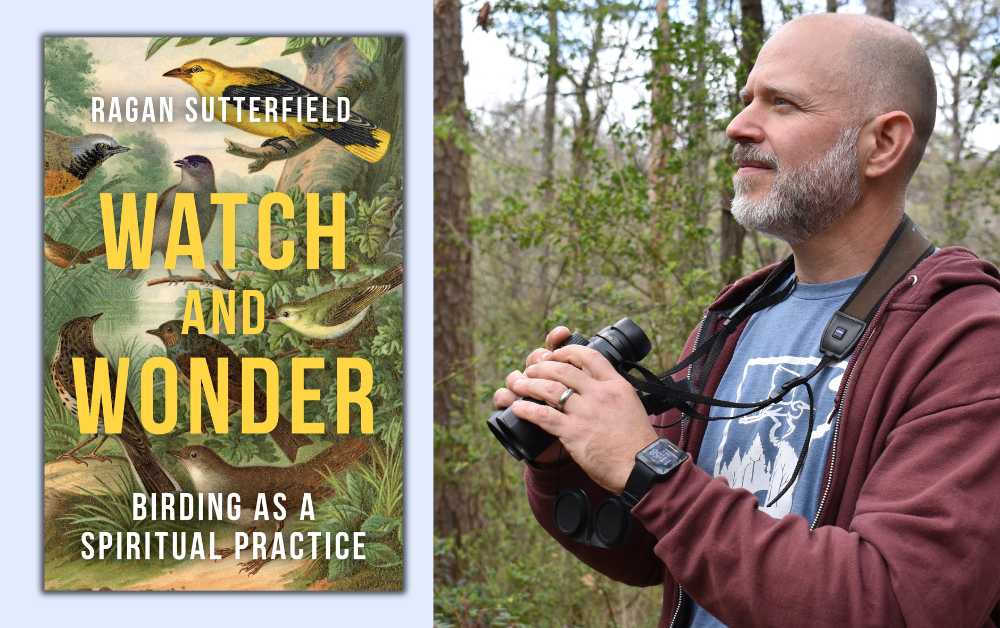
Reprinted with permission from Watch and Wonder: Birding as a Spiritual Practice by Ragan Sutterfield. Copyright © 2026 Broadleaf Books.