Necessary Questions
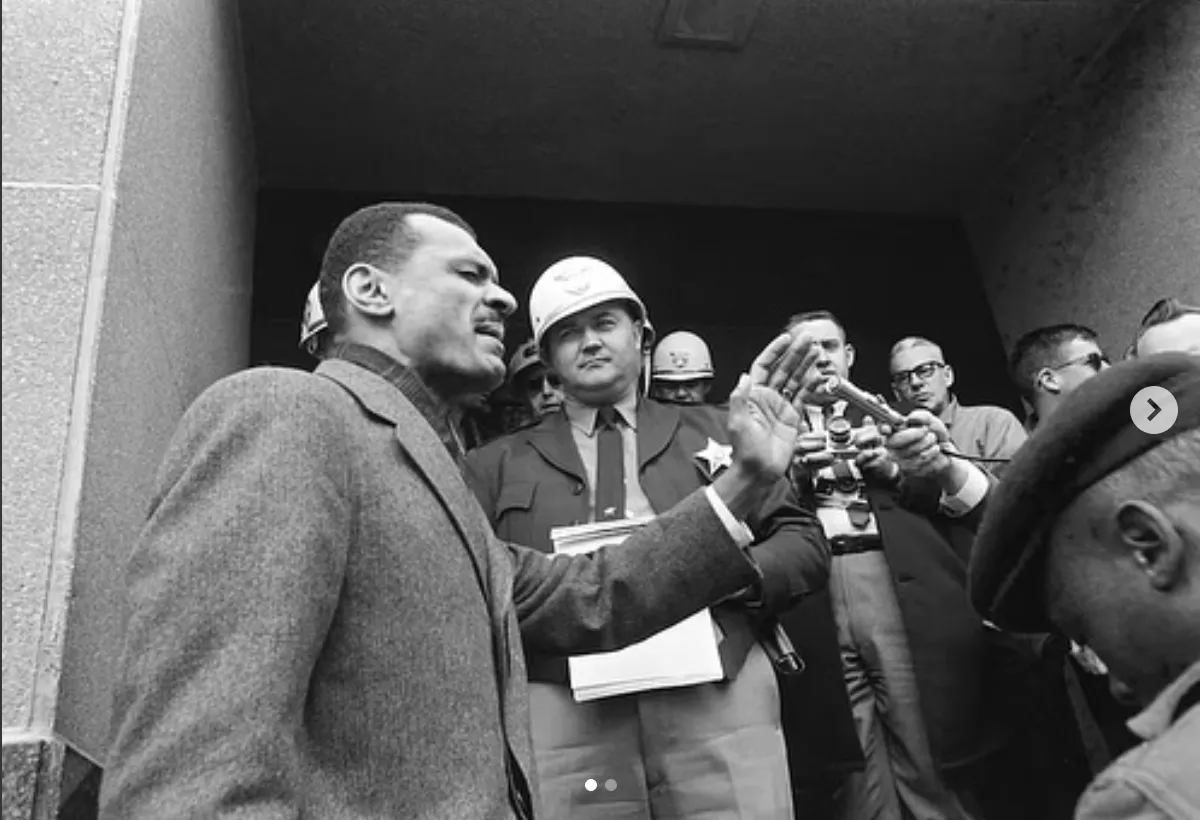
On February 16, 1965, Rev. C.T. Vivian publicly confronted Sheriff Jim Clark in Selma. Countless Black Alabamians had been turned away from their constitutional right to register to vote, so Civil Rights organizations had begun a campaign to press this issue.
“You can turn your back on me, but you can’t turn your back on justice,” Rev. Vivian shouted.
Sheriff Clark turned and punched the reverend in the face.
Still bleeding, Rev. Vivian asked the sheriff and his deputies, “What kind of people are you? What do you tell your children at night? What do you tell your wives at night?”
Rev. Vivian’s questions still echo today.
–
By now, I’m sure the whole world has heard about the beef between President Trump and Pope Leo XIV.
The president posted a long rant about the Pope, beginning with the statement, “Pope Leo is WEAK on Crime, and terrible for Foreign Policy.” I think that’s the craziest sentence I’ve ever read.
Does he know what a Pope is?
This is a 2,000-year-old tension. How will the church and state relate to one another? When a political leader confuses love for weakness, how will the church respond? How should Christian leadership speak and act in a world built upon the logic of retribution and coercive power?
In a zero-sum political landscape, the church just doesn’t make sense. An authoritative figure who is more swayed by theology than political power just doesn’t compute for Trump.
But this is the kind of witness that Jesus’ disciples are called to embody. If Christianity isn’t a little perplexing (even frustrating) to the “powers that be,” we’ve forsaken part of our calling.
–
The most recent example of America “jumping the shark” included President Trump posting an AI-generated image of himself as a messianic figure descending from the heavens, dressed like Jesus, healing the sick, with angel armies floating above him.
In other words, the president decided to kick off his week with blasphemy, literally displaying himself as a Christ-figure.
The question is, why? (And no, the answer is not that he thought he was a doctor.)
You know that moment in movies when someone talks a big talk just to see how people react? Maybe some kid strolls up to the popular table, or somebody unveils a dangerous plot to the group. They are testing the waters, watching to see who buys it, and hoping that – even if the larger group rejects them – someone might give them a wink.
That’s Trump’s AI-Jesus picture.
He revealed what he thinks of himself: a savior.
And before deleting it, he looked around to see who winked.
–
None of this is surprising.
I am reminded of a moment during Trump’s first campaign. In January 2016, he hosted a campaign rally in Sioux Center, Iowa.
The most famous soundbite from that speech was when he bragged about his followers’ loyalty, saying, “I could stand in the middle of Fifth Avenue and shoot somebody and I wouldn’t lose any voters, OK?” (A strange example that should have concerned more of his supporters.)
However, I believe that speech contained a more important quote:
“I will tell you, Christianity is under tremendous siege, whether we want to talk about it or we don’t want to talk about it. And yet we don’t exert the power that we should have. Christianity will have power. If I’m there, you’re going to have plenty of power, you don’t need anybody else. You’re going to have somebody representing you very, very well. Remember that.”
For the past 10 years, this idea (whether known or just perceived) has animated a significant portion of Christians to support the MAGA movement – even when it requires ignoring their moral compass.
But it also makes sense of Trump’s recent actions. “Why doesn’t the Pope understand the power he could have? I’m the messiah you’ve been waiting for! I’m giving you power!!”
With all due respect, Mr. President, we have no Christ but Jesus of Nazareth. When we profess, “Jesus is Lord,” we are simultaneously declaring that you are not. Christians receive power from the Holy Spirit, not the White House.
Our power is hard to understand. It looks like washing feet and turning cheeks, not landslide victories or displays of violence.
–
We are facing a crisis of character among our elected officials, and domination masquerades as religion. It’s worth asking:
What kind of people are we? What do we tell the people we love?
Editor’s Note: Previously published on Redemptive Imagination, Graydon Jones’ Substack, April 21, 2026.