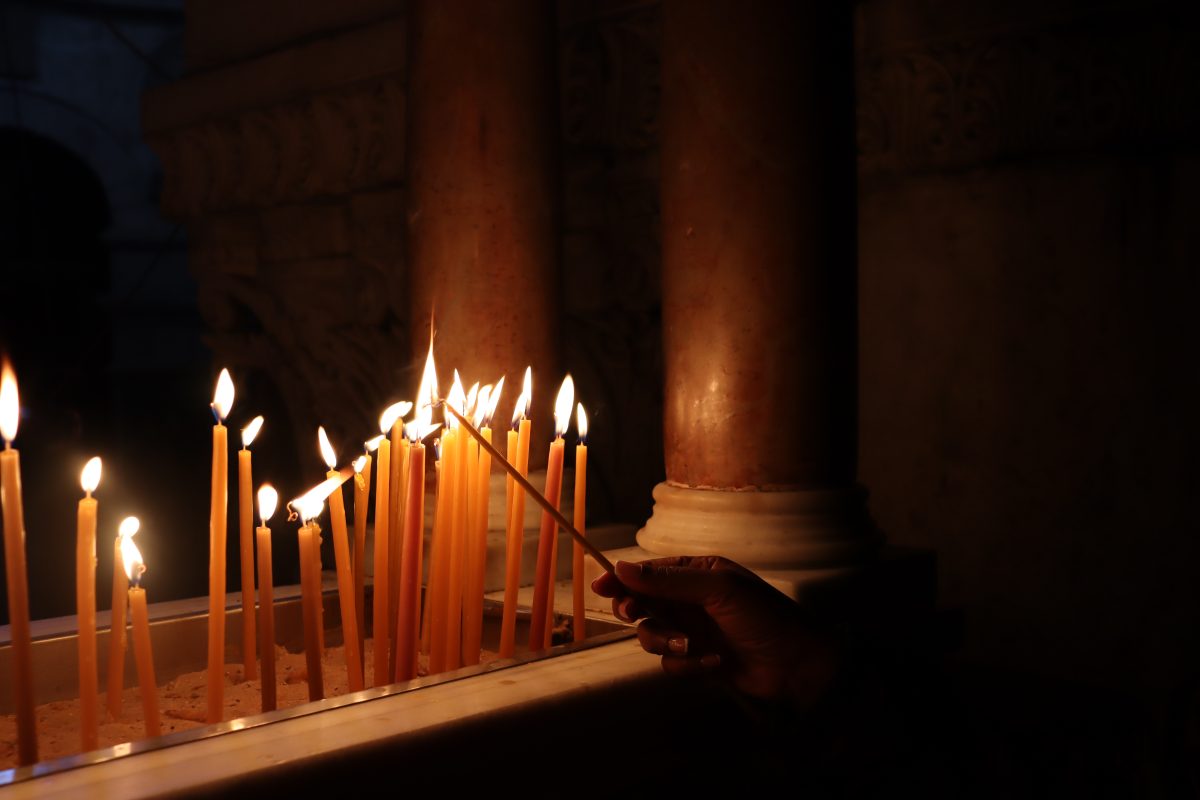
If Jesus were born in Bethlehem today, His first cry would be inside a walled city. Mary and Joseph would travel a road divided by checkpoints and concrete, stopping again and again before soldiers with rifles and AI enabled machine guns. The donkey’s slow steps would be replaced by the shuffle of feet through narrow turnstiles, the hum of generators, the metallic click of gates unlocking.
They would carry no gifts—just papers, faith, and the hope that the road would stay open long enough to reach the city before night fell.
Above them, surveillance towers would rise where shepherds once kept watch. The stars would still burn, though hidden by the glow of settlements on every surrounding hill. The angels would sing, though their chorus would be drowned by traffic, drones, and the murmur of waiting crowds.
And in a small apartment behind the Wall, a mother would labor by candlelight while power flickered in and out. Still, a cry would split the darkness—fragile, holy, defiant.
“The people who walked in darkness have seen a great light;
those who lived in a land of deep darkness—on them light has shined.”
— Isaiah 9:2
If it weren’t for the apartheid wall, Bethlehem could be a sister city to Jerusalem; but they are essentially worlds away from one another. Where once travelers could walk freely through olive groves, there now stands a barrier more than twenty feet high, slicing through the landscape like a scar. Every morning before dawn, lines of people press into its narrow corridors, permits in hand, to reach jobs, hospitals, or schools beyond the wall. Among them are Christians—the descendants of those who first followed the light that broke here two thousand years ago.
The Church of the Nativity still stands, its door low and narrow so all who enter must bow.
Inside, the air smells of wax and incense; pilgrims kneel where the Gospels say the Christ child was laid. But step outside, and the sound of prayer meets the clatter of police batons. The birthplace of peace lies confined by occupation. To get in and out of Bethlehem, Christians outside of the city must pass armed guards or show identification to soldiers younger than their own children. Even the shepherds’ fields—once open hills—are now bordered by fences and roads reserved for others.
And yet, this is not a story of despair. It is a story of birth—of light that refuses to be extinguished. Each December, the faithful of Bethlehem decorate their homes with stars cut from tin and paper. They hang lights across balconies and gather to sing “Gloria in excelsis Deo” in Arabic and Aramaic, the ancient language of Christ. In Manger Square, a towering tree glows beside the church, and children parade through the streets carrying candles. Their laughter threads through the checkpoints and echoes off the walls that hem them in.
One priest says, “We light our candles not because we are unafraid, but because fear does not have the final word.” Hope here is not sentimental—it’s survival. It’s the mother who walks an hour around the barrier to visit her family on Christmas Eve. It’s the shopkeeper who opens his door each morning beneath the shadow of the wall and greets every visitor with salaam. It’s the child who paints stars on gray concrete, transforming it into a sky of his own.
“Do not be afraid; for see—I am bringing you good news of great joy for all the people.
For to you is born this day in the city of David a Savior, who is the Messiah, the Lord.”
— Luke 2 : 10–11
Bethlehem teaches us that hope is not born in comfort. It comes to the small, the enclosed, the forgotten. It comes in the cry of a newborn under empire’s watch, in the courage of those who still call this place home. Here, Advent is not a countdown to celebration but a daily discipline of faith: waiting, believing, building peace one ordinary act at a time.
If you listen closely, the eerie silence is only broken by a few visitors and the hum of power lines, you can still hear the Nativity hymn rising from behind the wall. It is the sound of a people who have not given up on the promise first spoken in their own streets: “Peace on earth, goodwill toward all.”
This Advent, Christians around the globe are lighting red candles in a shared act of awareness, solidarity, and advocacy for justice and peace for Palestinians in the Holy Land. As you participate in holiday traditions with your family, light a red candle for Bethlehem—for the city where hope was born, and where hope still struggles to be born again. For every mother and father who carries peace across checkpoints, for every Palestinian child who dares to dream of an open sky.
Join us this Advent.
Light a red candle.
Pray for Bethlehem.
Let the light of Palestine shine bright today, as it first did 2,000 years ago.
To learn more about Red Candle: Light for Palestine and to take part in the movement this Advent, visit redcandle.org or follow @redcandlepalestine on social media.