
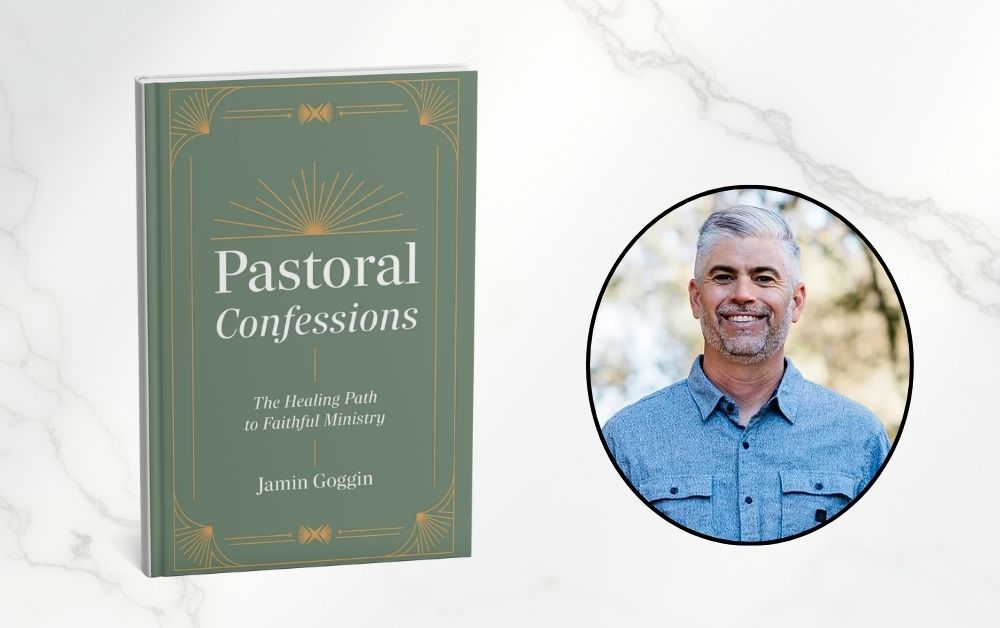
My gray hair tells the story. I’ve been a pastor for twenty years. Long enough to know the trials of the vocation. Years of diligently preparing sermons, only to be criticized for them. Years of seeking to build unity in the body of Christ, only to watch those I trusted divide the church. Years of coming face-to-face with my own flaws as a leader. Years of shepherding people through unspeakable losses. Ministry is hard.
Sometimes you don’t realize how exhausted you are until you stop running. It wasn’t until I took my first sabbatical seventeen years into pastoral ministry that I realized how weary my soul had become. I began my sabbatical with a solitude retreat in the mountains. I spent two days prayerfully recollecting my vocational story—people, places, events, experiences. As my retreat came to a close, I thumbed through page after page of journal notes. A strange feeling washed over me. A feeling I had occasionally, but fleetingly, noticed in the months leading up to my sabbatical. I tried to name it. It wasn’t fear. It wasn’t frustration. Was it sadness? Was it discouragement? Those felt close but still not exactly right. I didn’t know how to name what I was experiencing.
I needed a refined vocabulary of the soul to identify what was going on inside of me. I found one in the writings of ancient Christians. In these sages of the faith, I encountered a word that articulated with precision what was going on inside of me. Acedia, or the “noonday demon,” as the desert monks called it. This “demon” had confronted me at high noon of my pastoral life.
Acedia is not just a feeling but an elusive and deleterious vice. Naming the sin helped me to make sense of a peculiar cluster of emotions I had experienced leading up to my sabbatical. Peculiar, at least for me. In the normal course of my ministerial duties, I was experiencing a faintheartedness in the work I had long been so passionate about. I felt discontent.
Rather than fighting the discontentment with a renewed sense of conviction and determination, my heart had taken to a kind of melancholy and resignation. An unfamiliar apathy was settling into my bones. The fortitude I had long been able to muster in the face of challenges and hardships was nowhere to be found.
Acedia had been with me for some time. Sabbatical slowed me down enough to notice it. The silence and solitude of retreat cracked open the cave of my soul, which had been concealed by the boulders of duty and distraction. At first the darkness in this unexplored crevice of my heart felt treacherous and foreboding. What wild and unknown danger lurked here? If I climbed all the way in, would there be enough light for me to find my way out? I didn’t know how to enter into this place. I certainly didn’t know how to pray in this place. I needed help. I needed the Spirit who searches the deep.
Over the course of my sabbatical, the numbing of my hurriedly repressed life gave way to prayerful groaning by and with the Spirit. In the process, he breathed life upon the dead bones of discontentment in my heart. This was not a quick and easy escape from the emotional drudgery of acedia. God didn’t endow me with a novel and exhilarating vision for my church, nor did he gift me with a new and adventuresome calling for my life. Instead, he patiently and gently invited my wearied heart to come to him. Over and over again, I prayed a personal and vocational version of “I believe; help my unbelief!” (Mark 9:24), which went something like this: “I want to pastor, but help me because I don’t want to pastor.”
As my sabbatical drew to a close, I found that my heart had the strength to reengage my work. I was earnestly willing to embrace God’s calling upon my life. This strength and willingness of heart resulted in a different kind of satisfaction in my labor than I had experienced earlier in ministry. This was not a reinvigorated passion for the calling by itself but instead an abiding contentment in the love of the One who had called me. A love from which I could love.
As I entered back into my normal rhythm of preaching, pastoral care, meetings, emails, and the like, I experienced a genuine contentment in my vocation. It was a deep and true contentment. Unlike the fabricated version I had forged in my earlier years of zealous ministry. It was a contentment with my work but not by my work. It was a satisfaction not ultimately anchored in my calling but in God, who had called me. My heart was engaged with my labor because my heart was at rest in him.
Content taken from Pastoral Confessions – Baker Publishing Group by Jamin Goggin, ©2025. Used by permission of Baker Publishing Group | Trusted Christian Book Publishers.
