Matthew 25:31-46
The Call: The least protected children on earth
In the operating room in southern Gaza, an American orthopedic surgeon counted the wounds then stopped. “I’ve seen more incinerated and shredded children in one week than in my entire career,” he told CBS Sunday Morning. “And there were sniper bullets. I had children shot twice. No toddler gets shot twice by mistake.”
More than twenty visiting physicians said they admitted children with single gunshot wounds daily. One doctor said after the third or fourth case, “I realized it was intentional. Bullets were put in these kids on purpose.”
This is not chaos. It’s a pattern. Israel’s own defense minister announced a “complete siege” – “no electricity, no food, no fuel” – while calling Gaza’s population “human animals.” Finance Minister Bezalel Smotrich later argued it might be “justified and moral” to starve civilians by blocking aid. These were public positions.
Human Rights Watch calls it: “Starvation of civilians as a method of warfare.” The U.N. and WHO have tracked the surge of malnutrition deaths.
Jesus calls these little ones “the least of these.” If Christians mean it when we say we value life and follow Jesus, the least protected children on earth must be precious to us. After hearing the medics and seeing the pattern, we must speak: Israel is killing, maiming, and starving children with U.S weapons and approval. In Jesus’s kingdom, there is no neutral.
Neutrality Does Not Exist
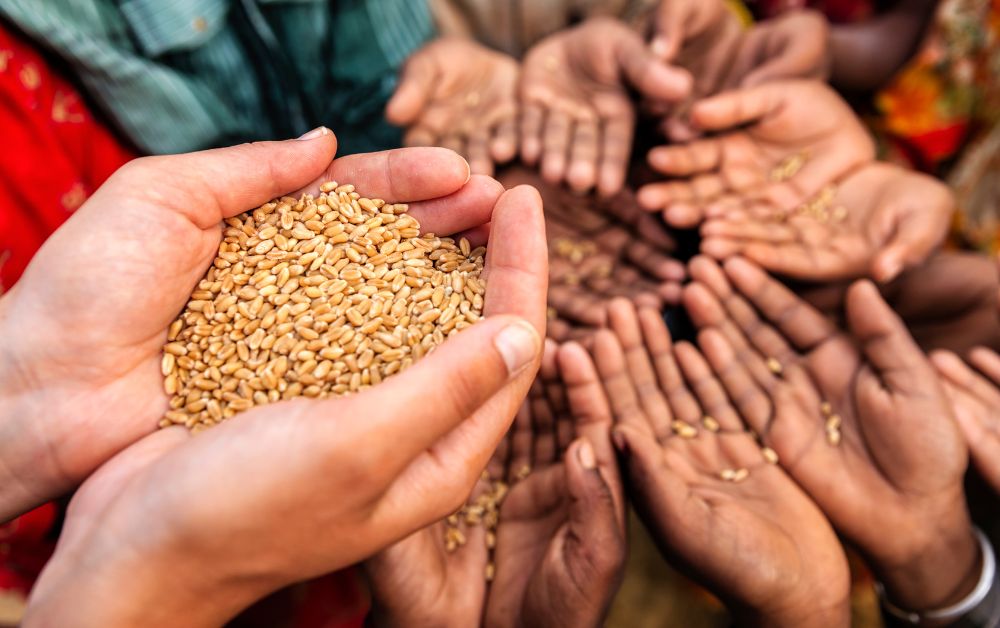
“I was hungry and you gave me food, I was thirsty and you gave me drink… whatever you did not do for one of the least of these, you did not do for me.” (Matthew 25:35–49)
For Christians, this is not metaphor but marching orders. When you hear of a hungry or thirsty child, Christ Himself is at your door. Our response is not optional charity. It is discipleship. The Judge does not ask what we felt, or which side we preferred, but whether we fed, gave drink, welcomed, clothed, visited. In a time when children in Gaza are dying of blast wounds, hunger, and disease, we must say what the gospel assumes: neutrality sides with the oppressor.
Neutrality promises a clean conscience; Jesus offers a clean heart and then sends us to act. We are not spectators to statistics but servants of the Lord who identifies Himself with the smallest ones. If we deny them bread and water, we deny Him. If we move toward them with food, medicine, shelter, and protection, we meet Him.
Not “random casualties”
“So any person who knows what is right to do but does not do it, to him it is sin.” James 4:17
The morning of the Flour Massacre, February 29, 2024, I cried before church with a vision in my head of taking sacks of flour from my kitchen and breaking them open on the pavement outside the sanctuary, and pouring red paint through the white so every person stepping over it would see what I had seen: starving people shot as they reached for food. I didn’t do it. I told myself that if I was too disruptive that friends would not understand. That people might think that I was crazy or even call the police. I called it caution. In truth, my fearful silence that day shielded the oppressor. So I went to church and wept instead, through prayers that never named the horror, through songs of redemption that felt like they were skipping a verse. Through a sermon about mercy that offered no mercy to “the least of these.” That morning in Gaza, 112 people were killed and about 760 were injured as crowds waited at an aid distribution point. Many children became orphans that day.
It was not random. It was a wound pattern. If Jesus identifies Himself with the hungry and the thirsty (Matthew 25:35-42), then every bullet that ripped a life away, every pang of hunger, and every tear of anguish touched Him. Our worship leads us to their breadline, or it isn’t worship at all.
These are not accidents at the margins of battle; they are recurring harms that fall most heavily on children. Jesus does not meet this with abstraction. He takes a child in His arms and says, “Let the little children come to me; do not hinder them,” and He warns of grave judgment for those who harm “the little ones.” He also identifies Himself with the hungry and the thirsty: “I was hungry and you gave me no food…” This suffering is felt in the very flesh of Jesus.
Christians, then, cannot shrug and say” tragic, but random.” The witness of medics, investigators, and health agencies shows predictable harms to children. The witness of the Gospel shows where Jesus stands, with “the least of these.” Our calling is to stand there too, in truth and action.
Where Jesus Stands
This is Christian ethics in a sentence: welcome the child, or you resist Christ. Our religion is not proved by our opinions but by bread, water, shelter, medicine, and protection offered to the small and the suffering. “Let the little children come to me” (Matt 19:14) is not a sentiment. It is an invitation we are meant to enact, opening our hands, our budgets, and our public voice. Scripture calls us to “speak up for those who cannot speak for themselves” (Prov 31:8-9) and to “care for orphans and widows” (James 1:27).
When power sells control as “peace,” Jesus answers, “Not so with you” (Luke 22:25-26). Our worship is proved in the line for bread, in the clinic line, in the phone call to a representative, in the welcome we extend to the displaced. If Christ is with the least, that is where the church belongs.
What Love Requires Now
Neutrality does not exist. Here are small concrete ways to move with Jesus toward “the least of these” today.
For individuals (start this week)
- Give monthly to child-centered relief: UNICEF (nutrition/water), PCRF (Medical care/evacuations), or a local partner like NECC/DSPR-Gaza (family support). Even $10/month matters.
- Call weekly (2 minutes): “I’m a constituent and a person of faith. Stop arming attacks that kill and starve children. Open crossings, restore aid, and halt weapons until international law is followed. I’ll be watching your votes.” (daily calls would be even better)
- Bear witness kindly: When a dehumanizing post appears, name it, verify, humanize and add one constructive action (donation link, call script).
For congregations:
- Pray together for the “least of these.” Be aware and identify the needs of those who are suffering.
- Sponsor care: back a PCRF pediatric case or therapy sessions for child amputees.
- Partner with ANAR (Beit Sahour) to train Palestinian caregivers and teachers in “rechilding” – trauma-wise practices that restore safety, play, and secure attachment for children living with violence and fear.
- Public witness: adopt a church resolution urging your representatives to condition or halt arms used in civilian harm and to cooperate with investigations into shootings at aid lines and starvation-as-a-weapon.
Public responsibility:
- Contact all offices (House & Senate): call, email, and show up at town halls. Ask for ceasefire, unfettered aid, and suspension of U.S. weapons.
- Vote your prayers: let Matthew 25 guide ballots, budgets, and endorsements.
- Consider what you buy. Boycott, Divestment, and Sanctions (BDS) is a powerful way you can stand up for “the least of these” as you choose products that do not contribute to genocide.
A rule of life: Before Sunday communion, make one weekday call and one weekday gift, so our “Amen” becomes bread, water, and medicine.
Not Spectators – Servants
Jesus has told us where He stands: with the least of these. On the morning of the flour massacre I called my silence “caution”; I see now my silence sheltered the oppressor. As citizens, we also carry a civic call: what is done with our taxes and in our name is our responsibility to restrain.
So we refuse neutrality. We will feed the hungry, give drink to the thirsty, welcome, tend, and protect. We will say “no more” to policies and weapons that make children targets. “I was hungry and you gave me food…” or “I was hungry and you gave me NO food…” (Matt 25:35, 41). Let our answer be audible, in phone records, in receipts, in votes, and in bread placed in small hands.
What the Numbers Say About Children (Numbers you can trust)Jesus identifies with the suffering: in every number is a child suffering. See this child as Jesus himself. |
|
| Read these numbers as lives: babies to teens, the “least of these” for whom Jesus says our yes or no to bread and water is our yes or no to Him. |