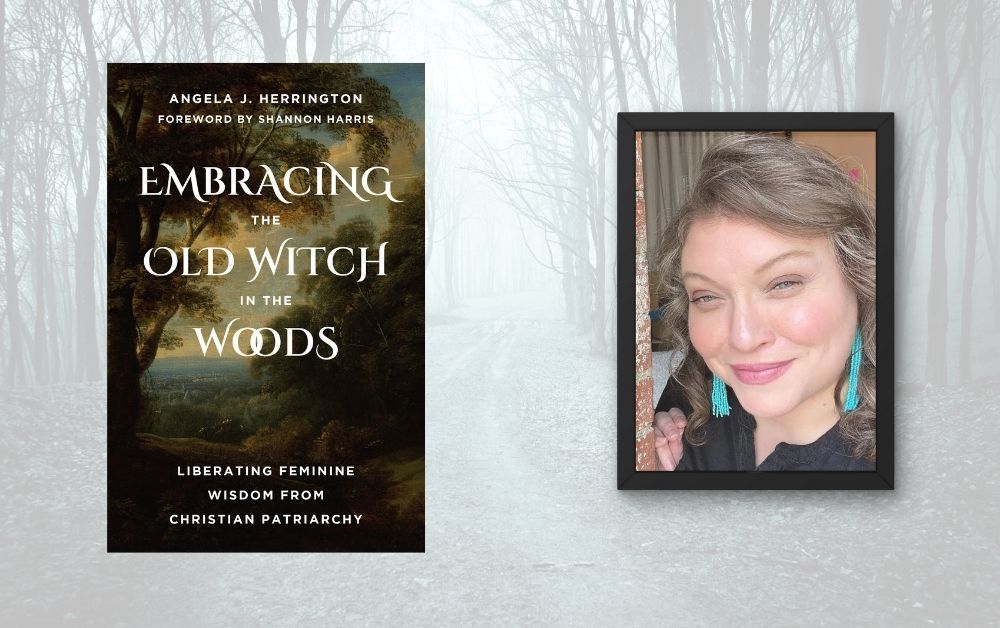
Mary, the Good Mother, an excerpt from Embracing the Old Witch in the Woods: Liberating Feminine Wisdom from Christian Patriarchy
In patriarchal contexts, women’s worth has historically been tied to their ability to bear children. From the earliest biblical stories, such as Sarah in the book of Genesis, women were often valued primarily for their role in producing heirs. Motherhood wasn’t seen as a choice but as a duty to ensure lineage and societal survival. This rigid expectation came with little acknowledgment of a woman’s autonomy or individual worth outside her ability to reproduce. Anything outside of this framework—choosing not to marry, infertility, or deciding not to have
children—was labeled a deviation from the natural order. This reduction of a woman’s identity to her reproductive role not only diminished her individuality but also stripped motherhood of the conscious, empowering choice it could be.
Perhaps no figure embodies this patriarchal ideal of motherhood more perfectly than Mary, the mother of Jesus. In
Christian tradition, Mary is venerated as the ultimate “good mother”: pure, obedient, and utterly devoted to her child. Her worth is directly tied to her ability to bear a son and her unwavering submission to God’s will. She is celebrated for her willingness to accept the angel Gabriel’s announcement without question, as seen in Luke 1:38, where she declares, “I am the Lord’s servant. . . . May your word to me be fulfilled.” This act of consent is framed not as a moment of agency but as a model of perfect obedience and submission.
Mary’s portrayal in art and theology further reinforces this idealized image of the self-sacrificing mother. For instance, in The Madonna of the Meadow (1506) by Raphael, Mary is depicted seated in a serene landscape, tenderly cradling the infant Jesus and John the Baptist. Her expression is one of quiet devotion and humility, emphasizing her role as a nurturer and protector. The painting’s idyllic beauty reinforces the narrative that Mary’s identity is wholly tied to her role as a mother, with no hint of individuality beyond her caregiving. Similarly, in
Michelangelo’s Pietà (1498–1499), Mary cradles the crucified Jesus in her lap, her sorrow symbolizing ultimate selflessness and suffering for the sake of others. These depictions, while powerful, reduce Mary to an archetype of submission and sacrifice, sidelining any other dimension of her character. (You can see both at AngelaJHerrington.com/mother-mary.)
Mary’s veneration as the ideal mother is further highlighted by the absence of her story beyond her relationship to Jesus. Her life outside the annunciation, pregnancy, birth, and death of Jesus remains largely untold. Apart from brief mentions in Acts, where she is present with the disciples, the New Testament gives little indication of her identity, desires, or contributions beyond motherhood. This absence underscores how her significance is tied almost entirely to her role as a mother, reinforcing the narrative that a woman’s worth lies in her caregiving rather than in her individuality or autonomy.
Her image as the “perfect mother” reinforces the narrative that good mothering is not about choice but about duty, sacrifice, and erasure of the self. She is praised not for her own wisdom, dreams, or desires but for her ability to exist solely for the benefit of others.
The elevation of Mary as the archetypal “good mother” creates a template of motherhood that idealizes submission and selflessness while discouraging autonomy and personal fulfillment. She is celebrated for being a mother who erases her own desires and identity to serve her child and God. This ideal leaves little room for the complexities of real-life motherhood, where women often have to balance their needs, ambitions, and identities alongside their caregiving roles.
This reductionist view has far-reaching consequences, continuing to influence cultural attitudes about motherhood today. Women are still pressured to conform to an idealized version of motherhood that prioritizes the needs of others over their own, and to internalize the expectation that their ultimate purpose is to bear children. For many, this narrative stifles the creativity, joy, and nurturing power that motherhood could embody. By focusing solely on a woman’s ability to sacrifice, patriarchal frameworks ignore the healing, creative, and empowering dimensions that mothering can encompass when approached as a conscious and autonomous choice.
It’s worth noting that this framework of idealized, sacrificial motherhood is not universal. While this discussion focuses on Western history, many non-Western cultures offer alternative perspectives on motherhood, often valuing women’s wisdom and contributions beyond reproduction. For example, in many Indigenous North American traditions, such as those of the Haudenosaunee Confederacy, mothers are deeply respected as leaders and caretakers of the community. Haudenosaunee women play critical roles in governance, holding decision-making power within their clans and ensuring the well-being of future generations. Andean Indigenous traditions in South America also honor mothers not only as nurturers of their families but also as stewards of Pachamama, or Mother Earth, symbolizing a deep connection between nurturing life and sustaining the natural world.
These are just a few of the traditions that emphasize the holistic contributions of mothers, celebrating their leadership, healing abilities, and wisdom in guiding their communities. In contrast, the Western Christian patriarchal tradition has disproportionately linked motherhood with submission, leaving little room for women to embrace the fullness of their identities.
Motherhood, when reclaimed, has the potential to be more than duty and sacrifice. It can also be a path of healing, creativity, and connection, where the act of nurturing becomes reciprocal—feeding the mother’s growth as much as her children’s. By challenging the narrative that equates motherhood with submission, we can open up space for women to exist as whole, autonomous individuals who approach mothering as a conscious, nourishing
choice that aligns with their values and desires.
Excerpted from Embracing the Old Witch in the Woods: Liberating Feminine Wisdom from Christian Patriarchy, written by Angela J. Herrington. Copyright © 2025 Broadleaf Books. Reproduced by permission.