“What do you mean by ‘justice’?” This is a question I frequently am asked when I talk about justice in my preaching or writing. If you’re a Christian advocate for justice, you likely are asked this question quite often as well. Now perhaps you, if you are a majority- culture Western Christian, see a question like this and think, Oh, it’s probably just a well-intentioned question from someone who does not have a clear understanding of what justice is.
That’s fair. But as someone born and raised in the Global South evangelical church, in which the pursuit of justice is largely normative, whenever I see Christians posing questions like this, I think, Shouldn’t we as Christians be the first to jump out of our seats when we hear of anyone in need of justice? Why this resistance to something that is so close to the heart of God and the gospel of Jesus Christ?
“What do you mean by ‘justice’?” Interestingly, I’ve never been asked this question by a non-Christian friend. I’ve never been asked this question by a Hindu, Muslim, Sikh, Buddhist, or atheist. Come to think of it, I’ve been asked this question exclusively by well- meaning Western Christians.
There are many ways to answer this question. Back when I first started mobilizing North American churches to prioritize justice, I would try to answer by referencing a Christian definition of justice commonly attributed to church father Augustine of Hippo: “Justice is giving to each person their due.” I think this is a terrific Christian framing of justice. This is how I define justice for us in this book too.
But when I share this definition at speaking engagements and continue to get blank stares, I usually go on to elaborate: “Justice is giving to each person the good things that God intended for them. For the survivor of violence, that’s healing and restoration. And for the perpetrator of violence, that’s accountability for the purpose of restoration.”
I’ve found this to be a particularly helpful way of defining justice for Western evangelical audiences (especially majority-white audiences) that often find their views of justice shaped by their favorite political commentators outside the church. In many of those spaces, and despite the historical Christian teachings on the matter, justice is a bogeyman.
An example of this suspicion of the work of social justice can be found in a 2023 YouTube video titled “Message to the Christian Churches,” where best- selling author and psychologist- turned- cultural- commentator (and fellow Canadian) Jordan Peterson says, “You are churches for God’s sake. Stop fighting for social justice. Quit saving the bloody planet. Attend to some souls. That’s what you’re supposed to do. That’s your holy duty. Do it. Now. Before it’s too late. The hour is nigh.”
Political commentators like Peterson have a massive influence on American Christians. In fact, the pastor of an Egyptian Presbyterian church in North America recently lamented to me that the youth at his church are more influenced by Jordan Peterson than they are by fellow Presbyterian Tim Keller. Many of us who engage the Western church in the work of justice often find ourselves running into church leaders or church members with similar sentiments— visions for the church that oppose the just and liberating gospel of Jesus of Nazareth.
Truth be told, these concerns about justice didn’t bother me at first. But five years into doing this work of mobilizing the North American church to prioritize justice, I started to notice a holy disillusionment settling into my bones. Why is it that only people in the church are asking me this question? And as someone who spent his childhood in the Global South church, Why am I only being asked this question by Christians in the West?
If you’re a North American Christian with a passion for justice, you’ve probably faced questions like this. Perhaps you’ve become numb to statements like the following:
“Define justice.”
“Social justice is not biblical justice.”
“Justice this world’s way is different from justice Jesus’s way.”
Now to be fair, there is a difference between justice Jesus’s way and justice the world’s way, though not in the ways you’ve likely been taught. Still, I’m trying to get to a couple of deeper questions here. Where does this resistance to justice movements inside and outside the church come from? And two thousand years after Jesus told us who our neighbor is— the answer being anyone in need of mercy and material liberation, as he taught in the parable of the good Samaritan— why is so much of the Western church still having this conversation?
Like so many others, it took me a long time to realize a deeper truth: Justice is not the natural disposition of the contemporary Western church. Martin Luther King Jr. once said, “The arc of the moral universe is long, but it bends toward justice.” While I believe this to be true because of God’s goodness, I also believe that for centuries now the arc of the Western church has bent in a different direction.
If that sounds harsh, just ask our Black neighbors, many of whose ancestors endured slavery, lynchings, and Jim Crow segregation, all of which were widely embraced and given theological cover by Christians. Just ask our Indigenous neighbors, whose ancestors were victimized by genocide, erasure, and church- run residential schools. Or ask my ancestors, whose land, culture, and way of relating to God were for centuries usurped by colonial Western powers backed by the Catholic, Dutch Reformed, and Anglican churches. Because of my own privilege as a male, upper- middle- class immigrant from the Global South, it took me until 2020 to fully realize the Western church has a history of repeatedly failing our poor and oppressed neighbors.
Many North American Christians’ responses to events and movements like Black Lives Matter, the violent transition of political power in the United States, and the COVID-19 pandemic were a rude awakening to many of us who have hungered for righteousness and justice in the church. It revealed to us a simple yet poignant truth: Instead of being shaped by the liberating Spirit of God that anointed Jesus to bring good news to people in poverty and oppression (Luke 4:18), much of the Western church was shaped by a theology that prioritizes the salvation of souls at the cost of the dignity and liberation of human bodies.
We need to unpack this theology in order to understand why justice remains a stumbling block for many Christians in the West.
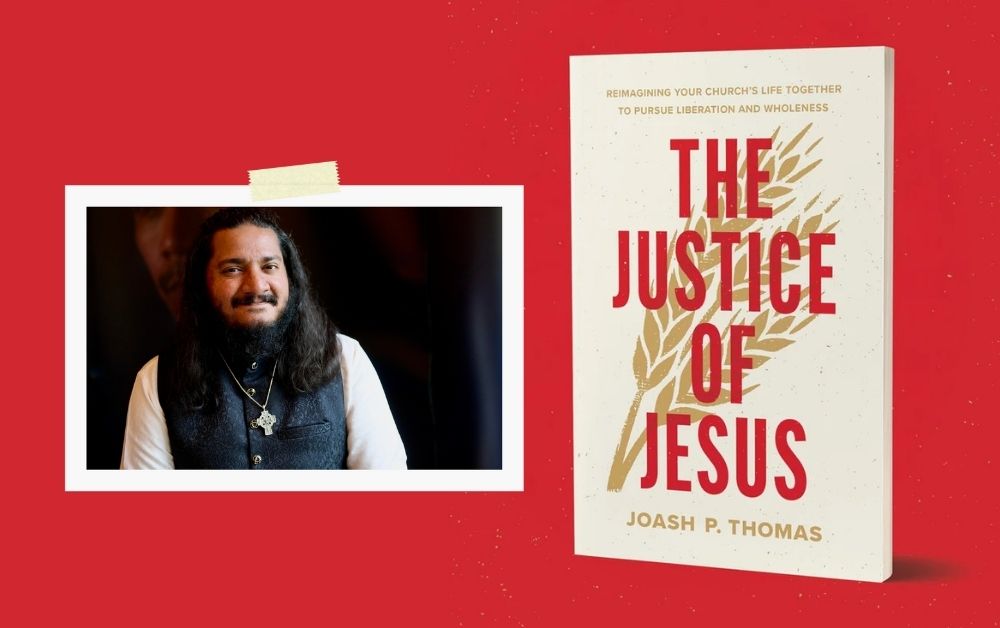
Content taken from The Justice of Jesus by Joash P. Thomas, ©2025. Used by permission of Brazos Press.