Early in the pandemic, leaders of Domestic Workers United (DWU), a grassroots organization of Caribbean, African, and Latinx domestic workers building power and demanding their rights in New York City, swiftly recognized the multifaceted impact of the crisis. They responded by initiating Know Your Rights Zoom sessions, offering vital information and support on health and employment issues during the global pandemic. While these virtual meetings were valuable, members of the DWU community also longed for physical connection and tangible support.
To address this need, DWU partnered with the Maple Street Community Garden in Brooklyn, forging a path of solidarity and care. Initially, this collaboration aimed to meet the basic need for food. Every week, DWU members and volunteers from the garden distributed twenty- five to thirty bags of healthy, sustainable food to women in the DWU community. But as they came together week after week and word spread, more people learned about this food distribution project or saw folks gathering in the garden and they began distributing sixty, seventy, and even eighty bags each week.
The garden soon evolved into more than just a site for food distribution; it became a ritual meeting place of healing and transformation. DWU members from across the city and neighborhood residents converged at the garden to find community, share stories, laugh, and dance. They came to get medicinal teas and homemade wine that members of the community made and sold. The garden became a place to come together and rebuild collective strength, reminding everyone that caring for each other physically, spiritually, and materially was essential.
Christine, a longtime leader of DWU, shared that in coming to the Maple Street Community Garden, the community gathered was seeking to “come back to the garden”—the garden of Eden—to a way of life where all needs were met. “We came to the garden to celebrate life. This gathering time became a ritual for our community.” The ritual of gathering in the garden was about refusing to let the struggles of daily life and the dominance of death leave people in fear and isolation.
Central to this community was Denise, a beloved member who started coming to the garden after losing her job because of the pandemic. Denise began making and selling homemade wine, a practice she brought from her home country. During this time, Denise grew sick, and the community learned she had cancer. As her illness got worse, there were days when she would come to the garden when she was not feeling well, and Christine would tell her, “Denise, you don’t need to come; stay home and take care of yourself.” But Denise would still come. Even when she could not talk, she would come to the garden to sit and listen. The community provided her with the support she needed, both spiritually and emotionally.
The garden became a source of spiritual healing for Denise. She needed the soul of the community to hold her during this time. She needed, as Christine called it, the “medicine from the yard.” The garden held the natural healing practices that came from the community and had been passed down from generation to generation; the sustainable food that was distributed to community members; and most importantly the medicine of the community that gathered to share stories, resources, songs, and laughter.
When Denise passed away, Christine spoke at her funeral about the power of Denise’s witness and movement leadership and her willingness to show up for things that matter. The ritual that evolved in the garden reflected this intentional practice of showing up.
The garden became a sacred space for those who gathered and pushed past the temptation to turn inward in the heights of the pandemic. To hold space and to show up is about commitment. And commitment is about being dedicated to the task at hand. One of the core meanings of the word dedicate is to “devote,” or to “make something holy.” The community that gathered in the garden were doing something holy by choosing to show up over and over again for one another.
In the end, the garden was not merely a physical space but a sacred sanctuary where the bonds of community were forged and the human spirit was nourished.
Gathering in the Garden: The Prayer/Poem
Coming Back to The Garden Post Covid 19/A Song for Denise Williams—04/04/63–08/29/24 by Christine Lewis, Domestic Workers United, Brooklyn, NY.
Fear, Mayhem, Madness
A fallen world, some thought
We made it, women with warm calypso accent echoed loudly
By the Grace of God, we made it!!!
Huddled on garden chairs beneath a huge weeping willow tree
which weep ever so often
One woman wipes away a tear from her arm
Women who double as home health aides and nannies navigate
The terrains of going to work and coming to receive a food bag
With sustainable fruits and produce from a fertile garden
pregnant
With herbs for what ails. Lemongrass, peppermint leaves,
Spanish thyme, hot peppers, bitter
gourds and whatever the woman with rhythm in her limbs could
find to heal
A community sits beneath the weeping willow tree at Maple
Street Community Garden
Talk of love, loss, lack of wages fought for and won, immigration,
green cards, and politics
Politics foreign to them with the understanding that politicians
play politricks
Yearning for a community away from the community they left
behind on Caribbean Soil
A community who will stand with us throughout the changing
scenes of life.
A community void of tricks, scam, and fraud
A community who will go with us
A community who will continue to meet under the weeping
willow tree for eight Saturdays in
summer and renew food bags even in fall. So needed
To hold up each other’s hand
To encourage another with a word or song
Or, who will go for us if we don’t go for ourselves
Even when the days seem dark and dreary
For Denise the days were dark and dreary
She showed up to the very end
Showing us what it means to belong to a community.
Hebrews 12:12–13:
12: Wherefore lift up the hands which hang down and the feeble
knees.
13: And make straight paths for your feet, lest that which is lame
be turned out the way, but let it
rather be healed.
In other words, we are called to care, encourage and lift up each
other and not get weary nor
lose heart in doing so.
Reflect, Embody, Discuss
- What do you think made the Maple Street Community Garden such a powerful symbol of resilience and community during the pandemic?
- How does the ritual of gathering in the garden help individuals like Denise cope with their challenges, both physically and spiritually?
- In what ways could the values of communal support and shared resources demonstrated in the garden be applied to other communities facing similar crises? What aspects of the Maple Street Community Garden could be replicated or adapted in your community to
- foster healing and resilience?
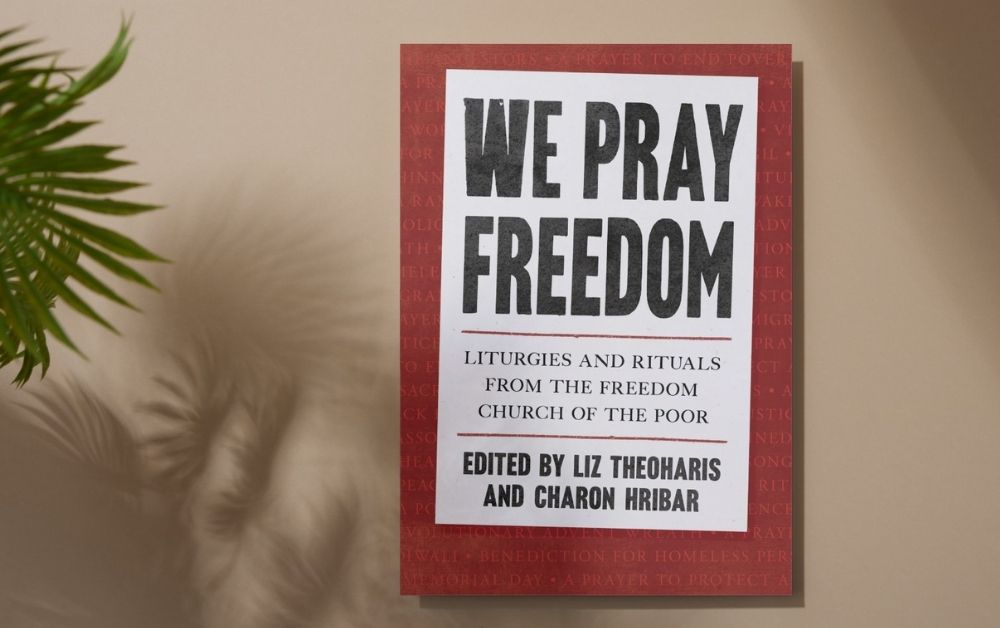
Excerpted from We Pray Freedom: Liturgies and Rituals from the Freedom Church of the Poor, edited by Liz Theoharis & Charon Hribar. Copyright © 2025 Broadleaf Books. Reproduced by permission.