They came not with weapons, but with stethoscopes.
On December 18, 2023, Dr. Adnan Al-Bursh, head of orthopedics at AlShifa Hospital in Gaza City, was arrested by Israeli forces. Weeks later, he was confirmed dead, his body returned from Israeli custody bearing signs of brutal torture. Dr. Al-Bursh was known not only for his medical expertise but for his insistence on staying in Gaza to care for the wounded, long after evacuation was possible. He believed in healing as resistance. He was not alone.
More than 1500 healthcare workers in Gaza have been killed. Hundreds have been illegally arrested, and many have been disappeared since the war began. Paramedic Youssef Zeino and ambulance driver Ahmed Al-Madhoun were shot while responding to calls. Nurse Israa Al-Banna was buried under the rubble of her hospital. Others, some as young as 22, have been imprisoned without charge. Their clinics turned to morgues. Their hospitals became battlegrounds.
Still, they chose presence over safety, care over escape. They stayed, knowing the cost, but unwilling to abandon the wounded.
Their white coats of peace and healing became targets. They stayed.
The Attempted Rape of the Angels (Genesis 19:4-11)
In Genesis 19, divine messengers arrive at Lot’s home in Sodom. By nightfall, a mob encircles the house: “Bring them out to us,” they demand. Not to offer refuge, but to degrade. The angels, sent to protect and save, are met instead with violence and humiliation. At its heart, this is a story about a society so broken it cannot recognize the sacred when it appears at its doorstep. It attacks those sent to rescue it.
Torture of Healers, Mob Justice, and the Collapse of Conscience
In Gaza, the ones carrying stretchers have become enemies. Nurses dragged from ER wards. Doctors disappeared from operating rooms. Paramedics bombed in marked ambulances. At Sde Teiman detention center, surveillance footage confirmed one of the most brutal assaults imaginable: Israeli guards gang-raped a Palestinian detainee with a metal rod. The resulting internal injuries were so grave that surgery could not repair the damage. The man, believed to be a doctor, died of internal bleeding.
An arrest followed. But so did the mob.
Within hours, crowds gathered outside the base, not in outrage at the violence, but in fury that anyone had dared to hold the soldiers accountable. They waved Israeli flags, chanted in support of the accused, and were joined by members of the Knesset. National Security Minister Itamar Ben-Gvir called the arrests “a disgrace.” Finance minister Bezalel Smotrich labeled the perpetrators “heroes.” Some voices in the crowd shouted, “We have the right to break them!” Another, “They are animals. They deserve what they got.”
It was Sodom… again.
The Modern Parallel
The angels in Genesis came to rescue, to warn, to bear witness. And the mob encircled the house, threatening to brutalize them. What kind of society demands access to those sent to heal? What kind of people protect the rapists rather than the wounded?
This is not ancient horror. It is a modern complicity. The story of Sodom is not about sexual deviance. It is about a society that turns violently against those who come in peace. It is about the collapse of empathy, and the rage that follows those who try to stop the violence.
When we watch crowds demand freedom for torturers… when we hear elected officials defen the rape of a man whose only “crime” was to heal, then we are staring Sodom in the mirror.
Just a Few Verified Cases of Targeted Medical Personnel
One image seared itself into the global conscience: Dr. Abu Safiya, wearing his white lab coat, walking with solemn courage toward an approaching Israeli bulldozer. That coat, flapping like wings without flight, became a symbol of resistance, dignity, and devotion. He faced not just destruction, but the machinery of erasure itself, armed only with his body and his oath to heal.
Dr. Adnan al-Bursh, head of orthopedics at Al-Shifa Hospital, died in Israeli custody on April 19, 2024. Fellow detainees report signs of torture and sexual violence. UN Experts called the evidence “horrifying.”
Dr. Mahmoud Abu Shehada, an orthopedic surgeon at Nasser Hospital, was arrested mid-shift. He was beaten overnight, stripped, and soaked in freezing water.
Dr. Bassam Miqdad of the European Hospital was detained for seven months. Guards punched him in already wounded areas and mocked his injuries.
Dr. Khaled Serr witnessed the rape of another detainee using a baton, resulting in torn rectal muscles that could not be repaired.
These stories are not aberrations. Investigations by the UN, Human Rights Watch, and Physicians for Human Rights-Israel confirm that more than 1,500 health workers and 460 aid workers have been disappeared, imprisoned, or killed. White coats, those everyday angelic robes of mercy, have become targets.
From Sodom’s Cry to Heaven’s Healing
They came not with weapons, but with stethoscopes. And though many now lie silenced beneath the rubble or behind prison walls, their lives continue to speak. They testify not only to what was lost, but to what still might be found, if we choose to listen. Then remind us that the work of healing is holy. That every stitch, every touch, every prayer spoken beside a hospital bed is an act of defiance against a world addicted to violence.
To Honor these white-coated angels of mercy, we must become healers ourselves. We must build what was broken, fund what was defunded. Hold what was abandoned. We must stand with those who choose life, again and again, in the face of death.
Because the Gospel does not end at Golgotha. It breaks open in the garden, at dawn, with wounds still visible and love walking among us. And if we listen closely, we might still hear it whispered on hospital floors and in ruined clinics:
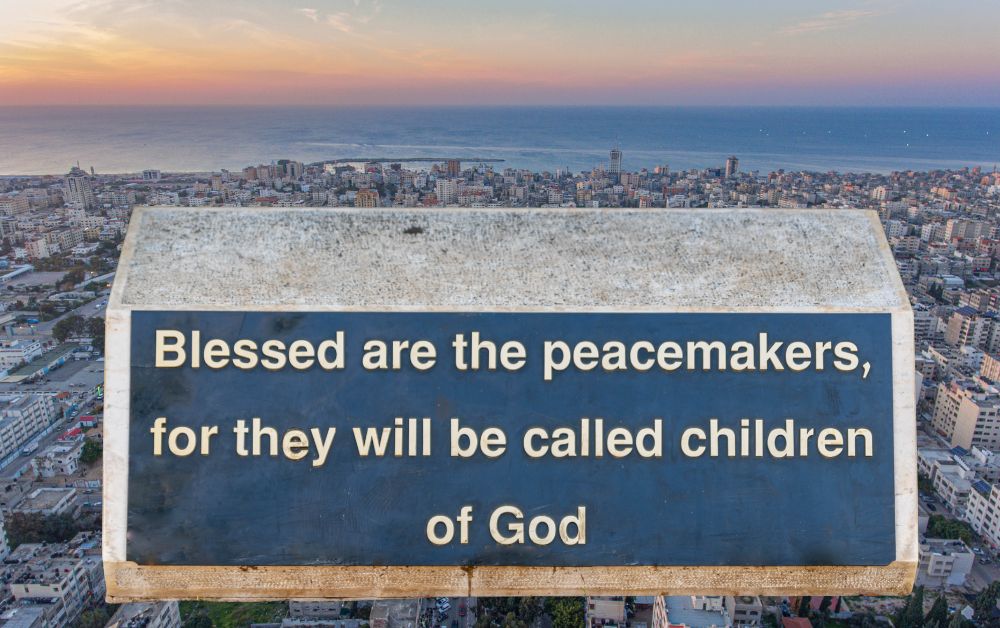
“Blessed are the Peacemakers, for they shall be called children of God.” Matthew 5:9
What Can We Do? Join the Work of Healing
To be Christian is to choose love over violence, hope over fear, truth over silence.
Let us be a solidarity of hope, a body of people who not only mourn the loss, but rebuild what was broken. Let us become healers in a world that wounds, and in doing so, join the angels.
If the world is still groaning, it is also still capable of giving birth. And the Gospel does not leave us in despair, it calls us to incarnation. To walk with those who suffer. To rebuild. To resotre, and to resist destruction by becoming bearers of life.
Here are a few concrete ways we can join the angels of Gaza in their work of healing:
Support Medical Training for Palestinians
Sponsor young Palestinians pursuing medical degrees at home or abroad, through programs like the Students for Justice in Palestine: Medical Solidarity Scholarships. Consider supporting institutions like Al Quds University Faculty of Medicine in Jerusalem, which trains the next generation of Palestinian healthcare workers.
Rebuild infrastructure
Organizations like Medical Aid for Palestinians (MAP) deliver emergency relief, medical supplies, mental health care, and rehabilitation services in Gaza and the West Bank. Health for Palestine, a grassroots clinic in the Dheisheh Refugee Camp, offers vital care by and for the community; donations help keep it alive.
Amplify Faith-Based Solidarity
Groups like Churches for Middle East Peace offer advocacy tools, webinars, and campaigns to help U.S. Christians take action for justice and peace. Kairos Palestine, a prophetic Christian voice from Bethlehem, calls on churches worldwide to embrace bold love and nonviolence. You can also invite a Palestinian healthcare worker or faith leader to speak, virtually or in person, to share their story and deepen your community’s connection.