There are moments when the walls of our sanctuaries feel thin—when the needs outside press so forcefully that they reach us in the pews. Springfield, Ohio is living one of those moments. Once seen as a beacon of middle America, our community now holds a different kind of promise: not economic, but ethical. Thousands of Haitian neighbors have arrived among us—not as a political problem, but as a spiritual invitation. And for those of us in the faith community, this is not a test of policy. It is a test of discipleship.
Scripture doesn’t tiptoe around injustice. It shouts. It indicts. It commands:
“Woe to those who enact unjust statutes and issue oppressive decrees, to deprive the poor of their rights and withhold justice from the oppressed.” — Isaiah 10:1–2
“You shall not wrong or oppress a foreigner, for you were foreigners in the land of Egypt.” — Exodus 22:21
“Let justice roll down like waters, and righteousness like an ever-flowing stream.” — Amos 5:24
These aren’t poetic suggestions. They are divine imperatives. And yet, the silence from many pulpits is deafening.
We are not called to comfort alone—we are called to courage. The Gospel, when read with open hearts and unclouded eyes, demands proximity to the suffering. Jesus, in his opening manifesto in Luke 4, declared good news for the poor, release for the captives, and liberty for the oppressed. His words were not theoretical. They were deeply incarnational. They walked. They touched. They healed.
To stand with the vulnerable is to walk where Jesus walked. Not because it is safe. Not because it is popular. But because it is right.
Our Haitian neighbors have not come to us lightly. They are survivors of what may be the most severe humanitarian crisis in Haiti’s recent history. Entire swaths of the country are under the control of violent gangs. Killings, kidnappings, and sexual violence have become tragically routine. Churches have been attacked. Hospitals shuttered. Over 1.3 million Haitians have been displaced within their own country. More than 5 million face extreme hunger. And thousands live in famine-like conditions that should shock our conscience. The United Nations calls it “a new low” in human suffering.
And yet, instead of compassion, Springfield has been met with conspiracy. In recent months, our city was thrust into the national spotlight after false and inflammatory claims—spread by Senator JD Vance and repeated by President Trump—suggesting that Haitian immigrants were eating local pets. These baseless accusations ignited fear, triggered threats of violence, and brought real harm to our community. Flyers from hate groups appeared. Bomb threats were made. And the dignity of our neighbors was dragged through the mud of political theater.
This is not the backdrop to a theological debate—it is the reason for a spiritual response. We cannot preach comfort while ignoring catastrophe. These families did not leave Haiti chasing prosperity—they ran from machetes and fire. From trauma and terror. From collapse and chaos.
Dr. Martin Luther King Jr. understood this deeply. He wrote from a Birmingham jail cell with grief for clergy who counseled caution and delay. He lamented the church’s addiction to order over justice, patience over urgency. His words ring uncomfortably true today:
“Justice too long delayed is justice denied.”
Too many spiritual leaders now watch the suffering from a safe distance, offering theological justifications for political neutrality. But neutrality is never neutral to those caught in the margins.
There is an old saying: “The church is not the master of the state, nor its servant—but its conscience.” When laws threaten to crush the very people Christ came to lift, our responsibility is not to accommodate them, but to challenge them. To tell the truth. To choose love with our bodies, not just our beliefs.
Some say, “This isn’t the church’s business.” But I ask—what then is our business? If not to welcome, to shield, to protect the image of God in every neighbor? If not to light candles in the darkness, even if the wind keeps blowing them out?
We are reminded, not just by King, but by the cross itself, that sometimes the way of righteousness passes through ridicule. Through misunderstanding. Through legal complexity and public scrutiny.
But Jesus did not tell us to take easy roads. He told us to take faithful ones.
So today, I urge my fellow clergy—pastors, priests, rabbis, imams—not to wait for clarity, but to move with conviction. Whether it be offering a room, a meal, a prayer, a public word, or a protective arm—now is the time to act.
Because every act of compassion is a sermon. Every open door, a gospel declaration. Every time we choose love over fear, we echo the kingdom.
Our Haitian neighbors are not statistics. They are God-breathed lives, worthy of dignity, deserving of rest. Whether they crossed oceans or borders, they are now at our gates, knocking not for handouts, but for humanity.
History has watched the church before—on the steps of Selma, in the shadows of Birmingham, at the borders of conscience. It watches again now.
The staircase ahead may be long, and unclear. But as Dr. King reminds us:
“Take the first step in faith. You don’t have to see the whole staircase—just take the first step.”
Let us take that step. Boldly. Humbly. Faithfully.
Not to provoke—but to proclaim.
Not to defy—but to disciple.
Not to transgress—but to testify that the Gospel still lives and still moves toward the margins.
We are not merely offering aid—we are offering hope. We are not simply shielding from danger—we are affirming the sacred worth of every person made in the image of God.
This is not a crisis for our churches. It is an opportunity. To embody what we preach. To resurrect what we profess. To show that love has feet—and they walk toward the broken.
Sanctuary may be the word others use. We might call it something else: faithfulness.
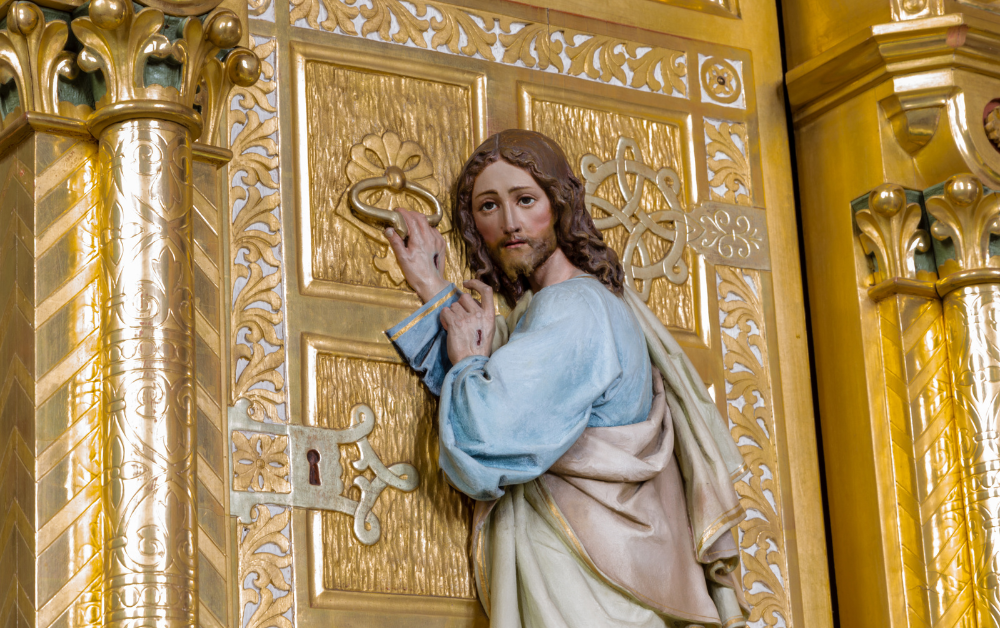
Because when the stranger knocks, the Gospel compels us to answer.
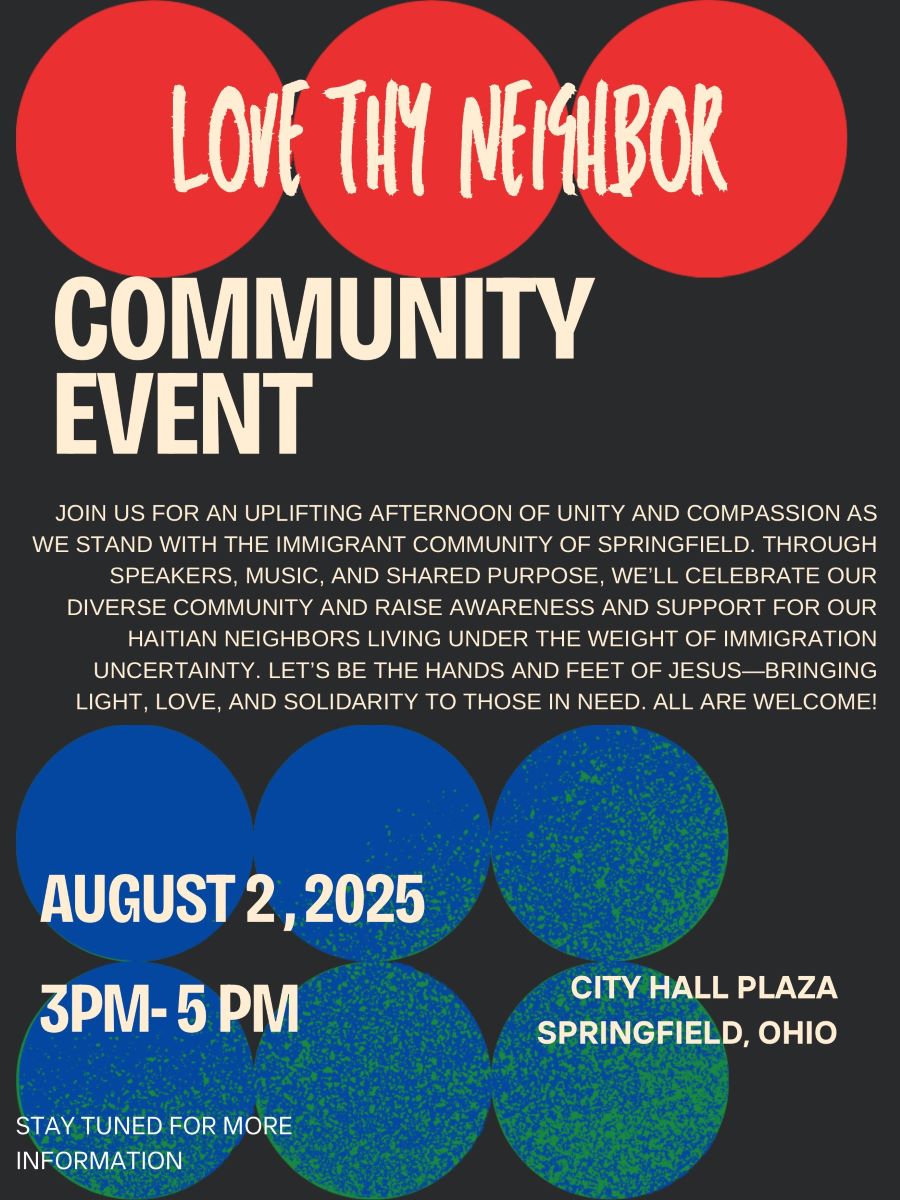
📣 On Saturday, August 2, from 3:00–5:00 PM, people of faith are invited to “Love Thy Neighbor,” an event planned to raise awareness of God’s call to stand with the oppressed, to welcome our Haitian neighbors, and to treat others as we would want to be treated if our lives were at risk. Organized by Springfield G92, a coalition of churches committed to the safety and dignity of our Haitian neighbors and brothers and sisters in Christ.