
I began digging my grave just short of two decades ago. The first thrust of the shovel into the ground came on a day that started out as ordinary. As the hours passed, my shovel penetrated the ground in my heart multiple times, making the hole larger.

Death barges in at any time and that day, it brought despair with it. As the weeks passed, I lived in the agony of my pain and in desperation, I plunged my shovel into the ground, lifting out more dirt, forming a hole for my coffin. Each mound I lifted cried out, God, help me. God, please save me. Silence replied.
Everyday life became a burden and my body showed evidence of despair. I’d enter a room at work and people quickly left, fleeing the pain they were afraid was contagious.
I’d stand alone and cry, Jesus, help me. The loudest silence of all met my words. In my solitude, I dug my grave a little deeper. I even spent lunch alone in my classroom because I couldn’t eat and I was ashamed for anyone to see this. My tears coated my words. Jesus, you say you are the Bread of Life. Please, feed me. Silence again and in my starvation, I continued to dig my grave.
At the end of each day, when my torment washed over me, I walked alone, sure God’s silence was because I was a failure. He had to be so disappointed in my lack of faith. My grave was getting close to six feet deep.
The day God broke his silence did not differ from others. In my high school Bible class, I was teaching the death of Lazarus found in John 11. I was not prepared for the gut-wrenching reaction I would have while reading familiar words aloud. I knew the story of Mary, Martha, and Lazarus by heart, but that day, I wasn’t reading about them; I was reading about me.
As I stood before my kids, tears pooled and overflowed as my voice caught while reading aloud Martha’s honest accusation. “Lord… if you had been here, my brother would not have died.” (John 11:21) Martha’s words reflected mine. Lord, if you had only been here! I added my own silent accusation. But you have remained silent! I was hurt, distraught, overwhelmed and confused. As life seeped out of me, I stepped closer to the grave I had dug.
For Mary and Martha, their heartache began when their dear brother, Lazarus, became ill. John tells us in verse 3, Jesus had a close relationship with this family, so they sent him a message. “Lord, the one you love is sick.” They probably expected Jesus to drop everything, come to their home and heal their brother.

In the days of my anguish, I was too afraid, ashamed, and overwhelmed to turn to anyone but Jesus. I imagined myself outside his door, too weak and distraught to even reach up and knock. I heard my misery crying out his name over and over, and there was nothing but silence in return.
Mary and Martha must have figured how long it would take for their plea to get to Jesus, and allowing travel time, they watched for him, but he doesn’t come. He was silent.
My anguish matched the sisters.’ I knew the Bible teaches I can come boldly to the throne of grace (Hebrews 4:16) and I came frantically. I was standing on the edge of despair. My heart kept crying, and I heard nothing.

Mary and Martha must have agonized throughout the day their brother Lazarus died. Their pain would have permeated his funeral preparations and the burial itself. I’ve wondered if their souls were in torment as mine was. Did Mary look out the window from time to time looking for Jesus and he did not come? Did Martha hope for a message to arrive from Jesus, telling her he had been detained but he wanted to let her know he cares and will be there soon? Silence has a loud echo.
In my classroom, I choked my way through my tears and continued my lesson in John 11. I noticed many of my students sitting on the edge of their chairs. They sensed the desperation of these women, and saw mine for themselves.
That day my failures shouted my grave was complete. I stood on the edge, teetering. I was not silent, I said to myself, You are such a poor example of faith to these kids. They would be better off without you. I heard nothing from God.
For Mary and Martha, Jesus’ arrival breaks the silence. Martha cries out the pain in her heart; “If you had been here, my brother would not have died.” (John 11:21) Yet, Martha had faith Jesus would make things right. My shamed burned within because my faith sat in the ashes of my despair.
Jesus then speaks but Mary could not understand his words, and honestly, I didn’t either. He said, “I am the resurrection and the life. He who believes in me will live, even though he dies.” (John 11:25) As I read these words aloud in my high school classroom, I wondered if my students could tell I was struggling to believe them. I told myself I should walk out of my classroom and let someone with more faith, step in.
Jesus next breaks the silence with Mary, who also states her brother would not have died if Jesus had come earlier. (John 11:32). As I read the words of Jesus asking to see where they had buried Lazarus, I looked into my grave. I wondered if Jesus would want to see where I would be buried, too. I wasn’t so sure.
When Jesus is at Lazarus’ grave, John simply states that Jesus wept. (John 11:35) Venom I didn’t know I was harboring, gushed out of my heart. I put my Bible down, looked out my window and shouted within. How could Jesus go to Lazarus’ grave and weep? If he was God’s son, he knew Lazarus had been sick. He knew Lazarus died, and he knew the miracle he would shortly perform. He. Knew. Why did he weep?
With tears flowing down my cheeks, I tore my gaze from the window and looked at the face of each teen sitting in my room. I saw some with tears; some with anger; some with hope and anticipation. I even saw some reflecting my desperation.
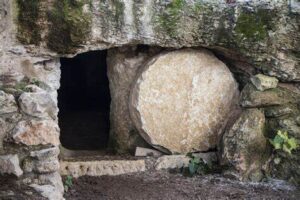
I paused in my lesson, not for emphasis, but because God had finally broken his silence with me. I sensed a gentle whispering within my heart. I no longer saw Jesus weeping outside Lazarus’ grave; I saw him weeping beside the one I had dug for myself. He knew how close I was to falling into my grave permanently and he wept. For me. I hung my head and cried.
There was silence in my classroom and yet, it was far from silent. It was in this vision I heard God saying, I understand. I’m hurting with you.
After a moment, I wiped my face, picked up my Bible and read Jesus’ words of love, mercy, forgiveness, compassion, and understanding; words of life. John 11:43, “Lazarus, come out!” and in that moment, Lazarus leaves his grave. Why? Because Jesus is the life giver. His words breathed life back into Lazarus’ body and into my soul.
That day, I stood before a classroom of teens and God brought me back to life. God took my hand and led me away from the grave I had dug and filled in the hole with: acceptance, mercy, compassion, love, forgiveness and understanding. I cling to and cherish this gift in a way I would never have been able to if I hadn’t lived in a period of despair.
P.S.
I want to tell you, gentle reader, that even though these things happened, I cannot say my sorrow ended, and my tears dried up. Does it mean I did not have faith in God? No, it means I’m human and part of this is experiencing the difficulties in life. The difference for me now is, I can close my eyes and see Jesus weeping beside my grave. It is enough to continue down my road to healing.
P.P.S.
Jesus is weeping beside your grave, too.