We have all had experiences of being so sure after we read a particular book or attended an inspiring conference that our lives would never be the same again. We would surely make the changes that we had journaled about. A new list of steps or dos and don’ts would equip us to lay claim to our best lives.
Until we didn’t.
We forgot. We never picked the journal back up again. Our lives returned to normal, but a few months later we restarted the process when the next book got recommended to us and the conference bill was posted.
Disappointment in our progress is always the result when we try to take charge of our lives. We make changes and they last until they don’t. We commit to resolutions until we forget that we’ve made them. We all have books on our shelves that we were sure were going to change our lives, and when we look at them now, we think, I remember that I really liked that book, I should read it again!
The process of change and the process of transformation are different. Change usually involves taking something new on, and transformation usually involves allowing something old to fall away so that something older can be rediscovered. Transformation usually lasts longer than change. Transformation reorients us in such a significant way that we usually look at life as before and after. Whereas change—which can be wonderful and can bring some great, lasting results—requires maintenance and constant feeding to keep on course.
Change and transformation are cousins to one another, and we can’t always dissect the fruit of our lives to determine which label best applies. Many times, change leads to transformation. A diet that you faithfully adhere to for years becomes a lifestyle, and you don’t have to remind yourself to eat a certain way any longer—you just do. Similarly, people who have found success through the recovery movement can attest to the demanding work that they have undertaken to make significant changes in their lives.
But many of the people who work the recovery steps for an extended period will tell you that they feel truly transformed—while at the same time acknowledging the fact that they are always working toward the change, which takes commitment.
You cannot will yourself to become spiritually or mentally healthy. Spiritual growth and the expansion of our souls is something that happens to us. Our work is to open ourselves to God’s working in us, which can happen through contemplation.
Until we learn to let go, we will never find our true selves. The words can get in the way, but try on and test my approach: we are responsible for the growth of our souls and not for anything else in the spiritual realm. God has taken care of all the heavens and hells, and God has already called us beloved sons and daughters despite our recognition or lack thereof.
The way that we promote soul growth is through a spiritual posture of letting go, not taking on. And contemplation is fundamentally a posture of letting go rather than taking on. As we lean into the spiritual posture of contemplation, we will naturally—without any of our willful doing—see our false self grow smaller and our true self grow larger. We are invited on the sacred journey of letting go to find ourselves—the truest selves that have always been the most intrinsic part of us but which we have masked and ultimately forgotten about as we have been building our personalities year after year, decade after decade.
Breaking the cycle does not require more willful doing. You don’t have to learn anything new or build any new habits. Instead, you must unlearn all the unhelpful adaptations and projections that have covered up who you truly are. You must let go to find you.
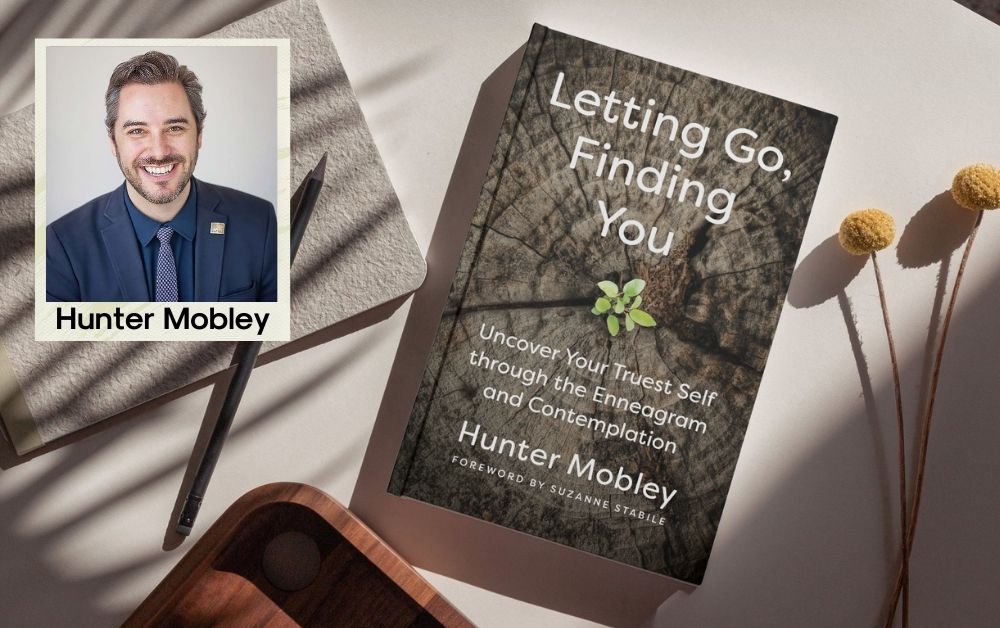
My book Letting Go, Finding You is simple because we need simple. I need simple. And I am guessing that you do too. Change is hard, but transformation is simple. Be assured that transformation will not be quick or free from suffering, but fortunately, our path to transformation is uncomplicated. When Jesus said, in Matthew 18:3, that unless we become like little children we will never enter the kingdom of heaven, he revealed to us that entering the kingdom of heaven—whatever we imagine the kingdom to be—is so simple that even children can do it.
As adults, we like complicated solutions because they feed our sense of control. But becoming like a child means shedding the layers of false self that have accumulated through the years and rediscovering our true selves that were present before we did anything wrong and before we did anything right.
We must become like little children and shed the false path of forging our own way, making our tremendous change and adopting discipline after discipline. If we want to truly find the joy and purpose of aligning our lives with God and the deepest iterations of our souls, then simple may be what it will take.
Reprinted with permission from Letting Go, Finding You: Uncover Your Truest Self through the Enneagram and Contemplation by Hunter Mobley. Copyright © 2025 Broadleaf Books.