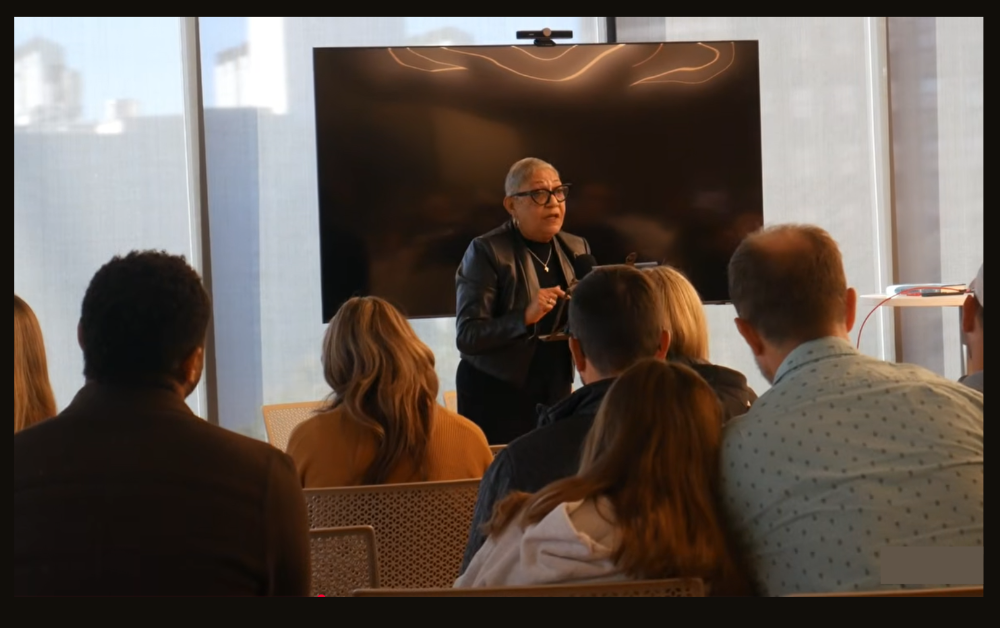
Peacemaker Conference, Philly, PA; Oct. 22-24, 2026
Ephesians 4:15 – Speak the truth in love
Good morning, my people. I am humbled to address such an astute gathering, and I don’t take this assignment lightly. Amen. Our reflection comes from Ephesians 4:15: speak the truth in love.
For the next five minutes, I want us to reflect on being a peacemaker. Peacemaking is often misunderstood as the absence of conflict. We may think we have achieved peace when everyone gets along or when we avoid confrontation. But true peacemaking is not passive. It is an active, often gritty, and profoundly courageous quest: building bridges where walls have been erected and seeing humanity in those with whom we fundamentally disagree.
At its core, being a peacemaker requires a radical kind of listening. In our current climate, namely, the mess we are conditioned to listen and witness everyday in the country, with the intent to reply—to identify the flaws in an opponent’s argument, to categorize their perspective as “wrong,” and to prepare our own defense. I believe the peacemaker does the opposite. They listen to understand the story behind the stance. They recognize that most conflicts are not merely about the surface-level issues being debated, but about deeper, often unvoiced fears, unmet needs, and fractured histories. Deep listening shifts us from judgment to curiosity, which may lead to a bridge of understanding.”
However, peacemaking is not synonymous with people-pleasing or conflict avoidance. There is a “peace at any price” mentality that is a form of violence, it silences the marginalized and maintains unjust status quos. Real peace is inextricably linked to justice. A true peacemaker knows that you cannot have a lasting peace without addressing the root causes of pain. This means having the courage to speak truth to power, speak the truth with love, to stand with the vulnerable, and to disrupt systems that thrive on division. It is the difficult, necessary work of holding tension between standing firmly for what is right and remaining open to those who stand on the other side. Amen
This work is exhausting. It is lonely. It requires a level of emotional labor that often goes unseen. Because of this, it is easy to become cynical or to burn out. To be a sustainable peacemaker, we must cultivate an inner life that can withstand the friction of the world. We need to find our own “center” that place of stillness and conviction that allows us to remain grounded even when the conversations become heated and the path forward is obscured. This might mean finding community with others who share this burden, engaging in practices of reflection, or simply remembering that we are not the sole architects of peace; we are merely planting seeds for a harvest we may never see.
Ultimately, being a peacemaker is a practice of hope. It is the stubborn, irrational belief that reconciliation is possible even when evidence suggests otherwise. It is the choice to extend grace when it is not earned, and to offer a hand when a fist is expected. It is a recognition that our lives are deeply interconnected—that your dignity is bound up in mine, and that the harm done to one of us is, in some way, an injury to us all. There is this gospel song, I need you survive. I won’t harm you with words from my mouth.
As you leave this conference, my challenge to you is not to go out and “fix” the world’s conflicts. Instead, look for the small, quiet opportunities for peacemaking in your daily life. Look for the moments where you can choose curiosity over judgment. Look for the moments where you can be a bridge rather than a barrier.
Peacemaking is not a title we earn or a destination we arrive at; it is a way of walking through the world. It is a commitment to be a presence that lowers the temperature, which softens the edges of division, and that reminds everyone we encounter that they are seen, heard, and valued. If we can do that—if we can carry that intention into our homes, our workplaces, and our communities—we will find that peace is not just something we talk about; it is something we create, one interaction at a time. Ache. Ache. Let it be.
Prayer and reflection — remain grounded in God’s peace before engaging difficult situations (Philippians 4:6–7).
Deep listening — seek to understand people’s fears, experiences, and needs before responding.
Self-awareness — recognize personal biases, emotional triggers, and the desire to “win.”
Truth spoken in love — address injustice honestly without demeaning others (Ephesians 4:15).
Healthy boundaries and rest — avoid burnout and remember that peacemaking does not require carrying every conflict alone.
Community and accountability — seek support from trusted people who encourage wisdom and courage.
Practicing forgiveness — release resentment while still pursuing justice and accountability.
Small daily acts of reconciliation — choose patience, curiosity, humility, and kindness in ordinary interactions.
Hope and perseverance — trust that faithful efforts may produce results over time, even when change is not immediate.
A fitting biblical reminder is James 3:17–18: “Peacemakers who sow in peace reap a harvest of righteousness.”
A Few clips from Sharon’s talk: