I asked my mom the other day, how far back our Norwegian ancestors are: my mom’s paternal grandfather came as a young adult to the US, and her great grandmother immigrated as a child, passing through Ellis Island. Both sets of parents fled because they didn’t have enough food and to provide a better future for their children. It is all too familiar a story.
The majority of us in this country are descendants of immigrants who have come seeking safety and a better future, fleeing violence and political unrest.
The immigrant story is not as palpable and embodied for many of us, especially those of us who are white or white-passing. And yet a friend of a friend was just deported to a country his family left when he was two years old. He does not speak the language in the country of his birth.
Can you imagine if I was deported to Norway because my ancestors came from there many years ago? Uff da is as close to any Norwegian language I know. I do not know the people and would feel like an outsider. Yet that is what the US is doing all too frequently in our mass deportations. We are deporting primarily people of color to countries, judging them not for who they are, but for where they come from.
Our fear so rooted and informed by institutionalized racism blinds us to the plight of so many being ripped apart from their families and lives as they’ve known them.
Reading through the Gospel of John as Jesus approaches his death and resurrection, I am struck again by how it was misunderstanding about Jesus’ birthplace that led some of the religious leaders to not believe he was the Messiah.
It was partially their judgment against the marginalized that blinded them to see Jesus’ identity.
“There is no prophet that comes from Galilee.”
Part of me longs for them to clarify, to ask Jesus where he was born. For this simple fact of his birthplace, to open their eyes to see that he is the Messiah, as predicted–born in Bethlehem. But it is ironic that what we now know so well, what our Christmas songs declare, O Little Town of Bethlehem, was a barrier to the religious leaders.
And even in the town Jesus grew up in, they do not recognize him as the Messiah. We read the story of when Jesus gets up in the synagogue and opens the scroll of Isaiah to read,
“the Spirit of the Lord is upon me, to preach good news to the poor, to set the captive free, to open the eyes of the blind…”
Then he sits down with the eyes of his community and family on him and says, “This word has been fulfilled in your presence.”
Mic drop.
The people do not see because they are blind to who Jesus is. They are putting him in a box. Asking each other, “Don’t we know where he comes from?”
As then, so now. We can miss Christ standing in front of us because we assume something different. We assume he comes with swords and machine guns, and yet he comes riding on a young donkey?
How often do we miss the Beloved and the image of God in another because we judge them for who they are or what they have?
Jesus boldly declares that he comes to set the oppressed free, to open the eyes of the blind.
Our news spreads the story of a Canadian woman and child who have been detained in the US. What if we had the same outrage for every Guatemalan, every Mexican? We do not see them in the same way because of their brown skin. We judge people for their country of birth, we scapegoat people who do not look like us, we do not have eyes to see.
Our traumatized and wounded self-protective strategies can lead us to pit people against each other, placing one group in more power than others, and thus using and often abusing others. Yet our wounded ways do not give us permission to keep going and get away with it.
We have done this as a society over and over again. Narratives that ‘they’ are taking our jobs. ‘They’ are the ones that are responsible for making our neighborhood dangerous. And yet that ‘they’ has changed over and over again, as this cartoon by Barry Deutsch (created in 2008!) still speaks so poignantly today in 2026, nearly twenty years later.

In 2014, I did a series of presentations on immigration to churches with my colleague who had emigrated from Mexico. We shared this cartoon and commented on what is still so true today: the current political rhetoric all too closely echoes the voices throughout history that have worried about immigrants ‘draining our economy’. The solution repeatedly proposed is ‘to build a wall’ and keep ‘those immigrants out’!
How are we called as Christians to respond? How does the Bible view ‘strangers’ and ‘aliens’? “Of the 613 laws in the Torah, the one that appears most often is the directive to welcome strangers” [Andy Newman, NY Times, 3.8.07].
More than once, Scriptures tell us to not mistreat aliens because we know what it’s like. “Do not mistreat an alien or oppress him, for you were aliens in Egypt” Exodus 22:21; 23:9. We are also reminded that we are strangers of this earth and citizens of heaven [1 Pet 2-11, Ps 119-19].
Jesus invites us to see and serve him in those around us. “… I was a stranger and you invited me in” (Matt. 25:35). We are also commanded by Jesus to love our neighbors, this includes people who look different from us and/or come from a different country. In fact, the author of Hebrews writes, “Do not forget to entertain strangers, for by so doing some people have entertained angels without knowing it” (13:2).
What if the US religious rhetoric was transformed into viewing strangers as angels, not aliens to be ostracized from society? What if in each person we saw the potential for mutual liberation, for cross-cultural transformation, and more simply as a precious human created in the image of God?
I know so many people who have crossed the desert borders, from unaccompanied minor kids I worked with at a shelter, to friends and families that I’ve gotten to know over the years. To a world relief refugee family from Afghanistan, who flew to two other countries before traveling from Brazil all the way up to the US by bus and foot, crossing the Darien gap and the Arizona desert. Although some have shared snippets of their stories, few have understandably wanted to go there. Retelling trauma after trauma is deep and painful work.
I finished the book, Solito, by Javier Zamora, and I’m in awe and so grateful he chose to share his story. Never have I so fully grasped the details of this harrowing journey as I do now. We have been given this gift, Javier entrusting us with his story as the readers. I urge you to read this book to enter into the heart-wrenching journey so many have travelled, desperate for new beginnings, for safety, for food.
And to those of you who have the privilege of American citizenship, call your representatives and senators urging against more funding for ICE and border patrol, taking away so many human rights of those who have immigrated here for safety, security, and freedom. See NIJC for more resources.
By the grace of God, may our eyes be opened to see all as our Creator created each to be.
Editor’s Note: An expanded version was previously published on May 1, 2026 on Bethany Dearborn Hiser’s Substack, Soul Care for Wounded Healers.
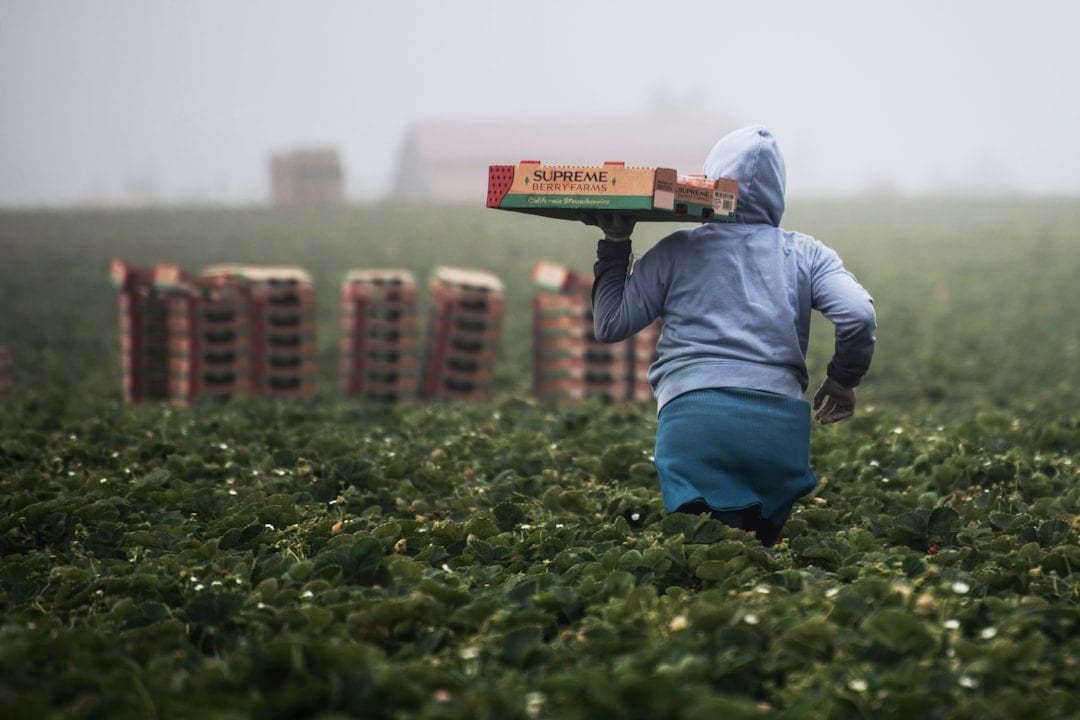
Featured Photo by Tim Mossholder on Unsplash.