A subversive approach to a subversive parable
[From Matthew 13:24-30, 36-43]
On the surface, the story reads quite clearly—maybe a little too clearly. If you’re a regular church attendee or peruser of Scripture, you’ve likely encountered this parable many times. What we typically see is a seemingly evident emphasis on the righteous-wicked divide that forms the tension of many of Jesus’ teachings. A man sows good seed in his field, and weeds sprout overnight. The weeds are, clearly stated, a result of an enemy’s work. Sabotage. And many a sermon could be and likely have been preached on this interference with the “good seed,” or will of God.
But what if the weeds are actually mere underdogs in this story; underappreciated yet also participating in the Christ-like act of nature and creation? When we think of how nature “should be,” we typically conjure an image that would best be described as a flourishing landscape: grand oaks standing tall, rivers clear and deep and full of life, endless pastures abundant with cattle. An Eden of our own imagining. And yet, we have no one singular way of living out that scene. Weeds serve as a prime example of this potential. They can flourish just as much as any other plant life—just as green and leafy—and yet they are typically regarded with frustration, or even fear. They hog the resources allocated for neighboring plants. For most, weeds are an enemy to flourishing. And, thus, weeds have no place in the ideal garden. For them, there is no Eden.
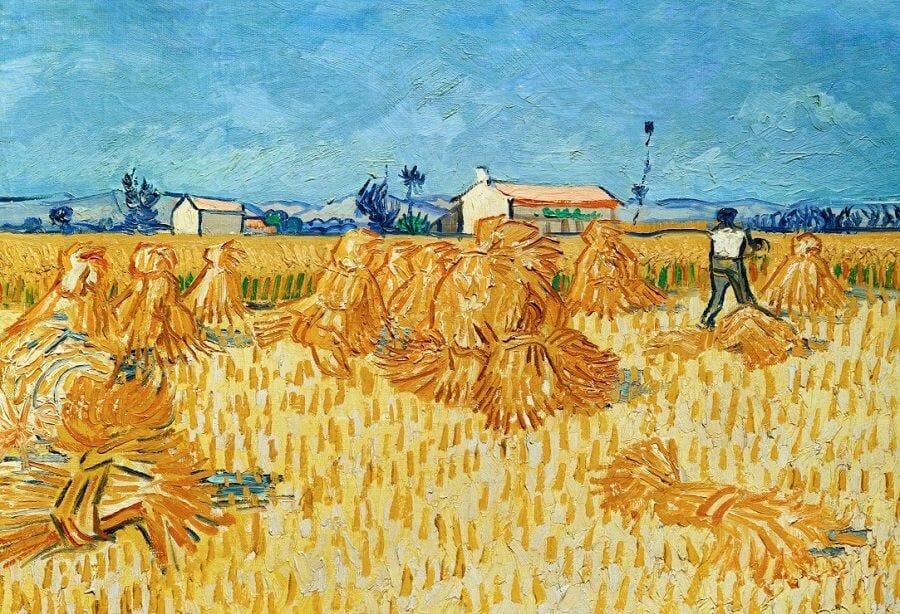
At the cornerstone of this parable is a term most might not associate with it: productivity. “Productivity” is one of those words that I hate tossing around, the main reason being that I don’t understand it all that well—not that many do. It’s a vague word with ambiguous execution. What does it mean to be productive? Who defines productivity? What might it mean for those who cannot fit someone else’s definition, and who still find themselves yearning to engage with the world around them? Can they, too, flourish?
When I first offered this perspective to the people of Embrace Ministries, a campus ministry at my undergraduate alma mater, I primarily focused on the neurodivergent experience as a way to comprehend the role of “weeds.” Neurodivergent people are very often not seen as productive members of society. And there are many, many more deemed weeds by society, primarily due to marginalized forms of identity that signal a particular lack of value to the socioeconomic forces that shape our world. Subconsciously, we’ve developed a system that knows who is allowed to flourish, and who cannot.
Consequently, there’s an odd, disturbing parallel between the literal and the figurative. In the parable, the weeds are not immediately plucked out, but allowed to grow alongside the wheat. The emphasis is on the harvest. Both grasses are productive; the difference is their prescripted identity. In place of the standard term “weed,” the King James version uses tare, which refers to a particular kind of weed that resembles wheat as it begins to grow, meaning once both grasses are fully grown, one can physically identify the wheat. Then, one can be collected and stored away while the other is discarded and burned, the productivity of the weeds all for nought. Marginalized weeds, likewise, suffer the same fate. They are allowed to grow for a brief while, discerned by the state, and then discarded upon discovery of incompatibility.
For a long time, I would have considered myself a weed, attempting to become wheat through emulating others who I deemed normal by society’s standards. And so often, marginalized folks of all stripes also attempt to mask to resist the fate already imposed upon them. And while the image of tare seemingly reinforces elements of sabotage, I think it provides a clearer picture of how we are to faithfully respond to this story.
One of Christ’s great commandments is to “love your neighbor as yourself.” And typically, in Christian upbringing, we are taught to see ourselves as inherently destined for hell; inherently unworthy of God. This teaching creates a paradox with the goodness bestowed upon humanity at creation, and we end up fostering a sense of hatred and projecting that self-hate onto others—which becomes how we love others as ourselves. We see ourselves as the seeds sowed by the evil one; merely existing because it happened to be so, now gorging the resources allocated for the promised few. In this way, the weeds are rather those deemed unworthy or unacceptable by the powers that be. Thus, they are thrown into the fire. The garden of empire does not allow for anything less than perfection.
A friend of mine, involved in seminary, expressed her thoughts thusly:
what has become very clear to me is the need for ways of telling our traditions stories that resist the impulses of empire. often we read the text with the logics of the hegemony we live in. In the rhetoric of empire is a concern for the fake or not real persons — often these folx are described with pejorative language as a viruses, animals, or pests. Perhaps even an invasive species of plant? Who the empire throws into the fire because they are not useful?
ecosystems are better with biodiversity
The coming kingdom that Jesus prophesied through his ministry, death, and resurrection might even be best described as a weed; a mustard seed; seemingly of no immediate value, and yet its potential is vast. I imagine the crowds being preached to needed this initially simplistic binary to understand how God works in a much more inclusive way than on first glance. The kin-dom is invasive and diverse, just like its Lord—showcasing against the broken ways of the world in such an awe-inspiring display that catches all off guard. The most perfect ecosystem covertly disseminating salvation into our midst. Sabotage is not the same as resistance.
And amidst all our strife, we must not lose sight of the immense hope we have—that this person—the Jesus we claim to follow—promises life; an abundant life which thieves cannot steal, nor demons hide, or hatred conceal. Christ in love through the cross has deemed us acceptable in his sight. We can finally love as God loves us—authentically and without fear. What if those we have deemed to be weeds have been just as meaningful as those proclaimed wheat?
Now—and I need to make it clear—this solution is far more than announcing that we need not matter about being productive by worldly standards. We face a complex crossroads where standards of life and death come to a head; where identity and faithfulness stand against the letter of the law; of the ideal, productive laborer. If we are to form a liberative understanding of weeds, we must do so with love and faithful resilience. Our affirmation that the garden of God’s kin-dom allows for all life requires a commitment to protect that life, weeds especially included.
A final note—certain translations of this parable use “thistles,” signifying a diversity of identities through which subversive theology can flourish—a theology for the marginalized craving God yet rejected by mainstream religion. A new harvest in which all, from the greatest to the least, can find themselves “in the kingdom of their Father.” Perhaps, in order to properly tend to this ideal garden, we need not root out the weeds, lest we root out those we are called to serve.